

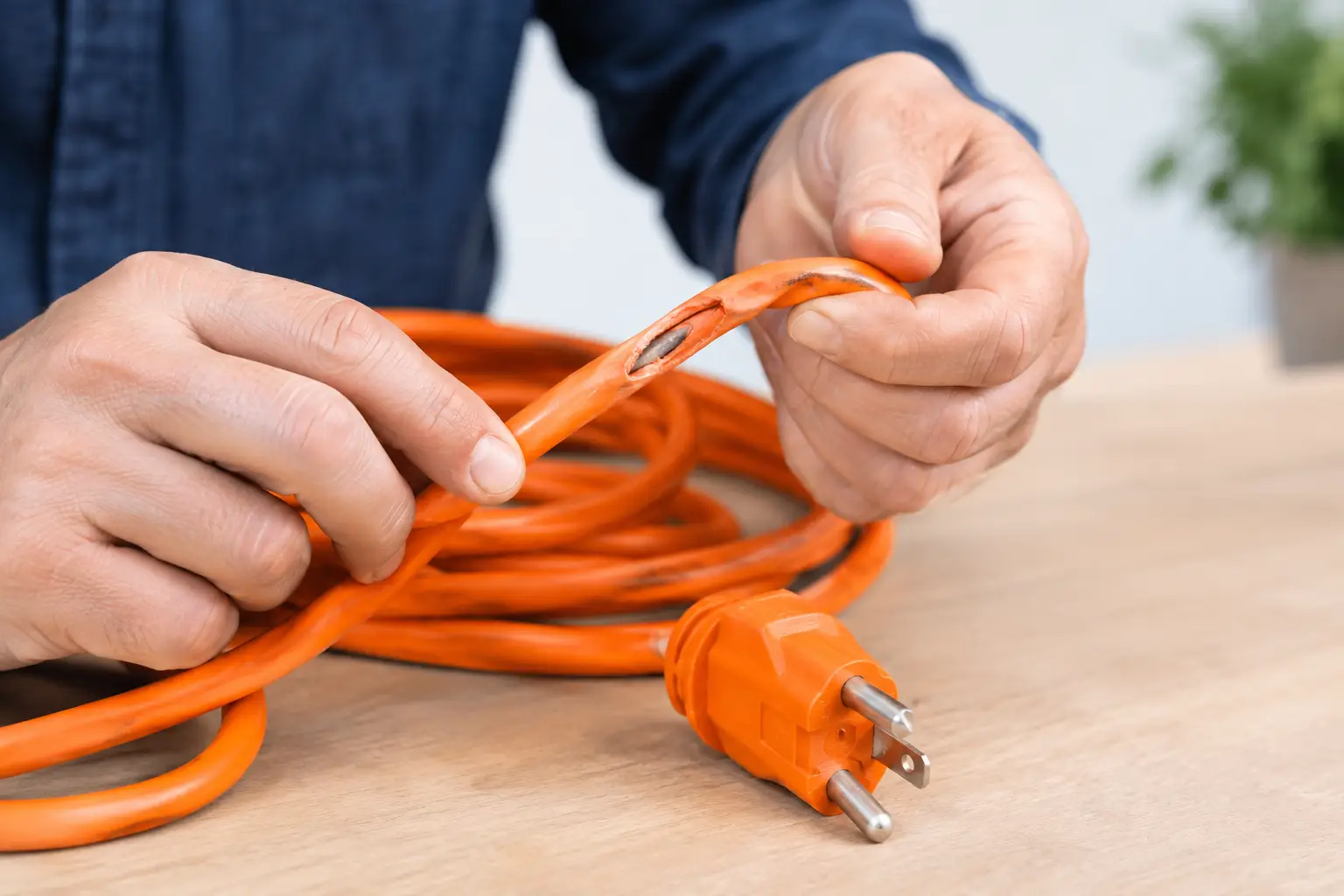
An extension cord often fails where you least expect it: at the plug, where it bends behind furniture, or beneath a rug where no one sees it. Taking a few minutes to inspect damaged extension cords can prevent shocks, overheating, damaged appliances, and house fires. This is a simple homeowner task, but it starts with one non-negotiable rule: unplug the cord from the wall before touching or examining it.
Start With a Safe, Unplugged Inspection
Never inspect a cord while it is connected to power, even if the appliance at the other end is turned off. Unplug it by gripping the plug body, not yanking on the cable. If the plug feels hot, is stuck in the outlet, or shows melted plastic, turn off the circuit breaker before trying to remove it. If you are uncertain which breaker controls the outlet, leave the cord alone and call a qualified electrician.
Move the cord into good light and stretch it out loosely on a dry floor or table. Do not pull it tight. You are looking for damage to the insulation, plugs, connections, and the overall shape of the cord. A clean cord is easier to inspect, so wipe away loose dust with a dry cloth. Do not spray it with water or household cleaner.
Check the entire length, not just the ends
Run the cord slowly through your hands, feeling as well as looking. The jacket should feel smooth, flexible, and consistent from end to end. Pay extra attention to areas that have been pinched in doors or windows, bent sharply, stepped on, run under rugs, or exposed to sun, rain, garage chemicals, or lawn equipment.
Look for these warning signs: Related: How to Replace an Outlet Myself Safely at Home
- Cuts, cracks, splits, holes, or exposed copper wire
- Flattened, crushed, pinched, or unusually thin sections
- Brittle, sticky, stiff, faded, or discolored insulation
- Electrical tape, duct tape, glue, or other homemade repairs
- Burn marks, melted spots, bubbling, or a sharp burnt-plastic smell
- A cord that feels warm after normal use
Any exposed wire means the cord is unsafe. Do not wrap it in tape and put it back into service. Tape can loosen, trap heat, hide worsening damage, and fail to restore the insulation or strain relief the cord originally had. Replacement is the safe fix.
Inspect the Plug and Receptacle End
The plug ends take the most abuse because they are pulled, bent, and repeatedly inserted into outlets. Check both the male plug that goes into the wall and the female end where the appliance plugs in.
The plug blades should be straight, firmly attached, and free of corrosion, dark spots, or pitting. Bent blades may fit poorly and create heat at the outlet. Missing ground pins are also a reason to replace a three-prong cord. Never cut off a grounding pin so the plug will fit an older two-slot outlet. That removes a key layer of protection for grounded tools and appliances.
Look closely where the cable enters each plug end. This section should have a molded or flexible sleeve called strain relief. If the jacket is pulling away from the plug, if internal wires are visible, or if the plug housing is cracked or loose, retire the cord. A loose connection can arc inside the plug even when the outer damage seems minor.
The receptacle end should grip an appliance plug firmly. If plugs slide out easily, feel wobbly, or the receptacle is cracked, do not use it. Also check for blackening or melting around the slots. These are signs of overheating, often caused by a loose connection or an overloaded cord.
Know the Difference Between Surface Marks and Real Damage
Not every mark means a cord is unsafe. A dirty jacket, a small paint smear, or light scuffing that does not break the outer insulation may be cosmetic. If the cord remains flexible, has no cuts or flattened areas, and its plugs are secure and undamaged, it may still be suitable for its intended use.
The decision changes as soon as the jacket is compromised. A nick that reaches the inner insulation, a deep crease from a crushed cord, or an area that has become hard and cracked is not merely cosmetic. The cord may have weakened conductors inside, even if it still powers a lamp or charger today.
Do not use the “it still works” test as proof that a cord is safe. Electricity can continue flowing through a damaged conductor until it overheats, arcs, or shocks someone. A cord that works intermittently, flickers when moved, or causes an appliance to cut in and out should be removed from service immediately.
Check Whether the Cord Is Being Used Correctly
A cord can look perfect and still be unsafe for the job. Before returning it to use, read the printing on the jacket or tag. It should identify the cord’s rating, such as indoor or outdoor use, wire gauge, and maximum amperage or wattage.
Match the cord to the appliance and environment. Lightweight indoor cords are fine for low-draw items such as lamps, phone chargers, and small electronics. They are not a good choice for space heaters, portable air conditioners, power tools, sump pumps, or other high-demand equipment. These appliances generally need a properly rated, heavy-duty cord if an extension cord is permitted at all. Related: Best Home Outage Checklist for Safe First Steps
Avoid using an indoor cord outdoors, even temporarily. Outdoor-rated cords have jackets designed to handle moisture, temperature changes, and sunlight better than standard indoor cords. For garages, basements, kitchens, bathrooms, and exterior outlets, use ground-fault circuit interrupter protection. A GFCI outlet or breaker can cut power quickly when it detects a ground fault, but it does not make a damaged cord safe.
Watch for overload and heat
If a cord has felt warm, do not simply let it cool and try again. First, unplug it and inspect it. Heat can mean the cord is overloaded, undersized for the appliance, coiled too tightly, or developing a poor connection at a plug end.
Never cover an extension cord with a rug, blanket, furniture, or insulation. Heat needs a way to dissipate. Avoid connecting one extension cord to another, often called daisy-chaining, because the combined setup can be overloaded and creates more connection points that can loosen or overheat.
When Replacement Is the Only Safe Choice
Replace the extension cord if it has exposed wire, a damaged plug, melted plastic, loose connections, a missing ground pin, deep cuts, crushed sections, or any evidence of overheating. Replacement is also the right choice if you cannot read the cord rating or do not know whether it is rated for the intended location and appliance.
For a basic household cord, replacement is usually inexpensive compared with the risk of a fire, shock, or damaged appliance. When choosing a new one, select the shortest length that reaches comfortably. Longer cords have more voltage drop, especially when powering higher-demand tools or equipment. A shorter, correctly rated cord is usually safer and performs better.
Some heavy-duty cords have replaceable plug ends, but this is not a casual repair. If you are not fully comfortable selecting a listed replacement plug, cutting back the cable correctly, and making secure connections, replace the entire cord. Homeowners should not attempt to repair a cord with hidden damage along its length.
Store Cords So They Stay Safe
Good storage makes future inspections easier. Unplug cords after use, coil them loosely, and keep them dry. Avoid wrapping them tightly around your hand or elbow, which can twist and stress the conductors. Keep cords away from sharp edges, direct sunlight, standing water, and places where vehicles or doors can crush them.
Label cords used for outdoor tools or seasonal decorations so they do not get mixed up with lightweight indoor cords. A quick inspection before each use is especially worthwhile for cords stored in sheds, garages, basements, or vehicles, where temperature swings and rough handling are common.
A damaged extension cord is not a repair you need to gamble on. If your inspection leaves any doubt, take it out of service and replace it. That small decision keeps your next home project moving safely instead of turning a simple convenience into an electrical emergency. Related: Electrical Emergency Response Guide for Homes
For more expert guides, visit Circuit Fixer.
Frequently Asked Questions
What causes How to Inspect Damaged Extension Cords Safely?
This issue is usually caused by wiring problems, overloaded circuits, or faulty electrical components.
How to fix How to Inspect Damaged Extension Cords Safely?
Start by checking the breaker panel, then inspect outlets, switches, and wiring connections carefully.
Is How to Inspect Damaged Extension Cords Safely dangerous?
Yes, it can be dangerous if ignored. Electrical issues can lead to fire risks or equipment damage.
Circuit Fixer provides expert electrical troubleshooting guides for homeowners in the USA.
Learn more about us at Circuit Fixer.
Author: Circuit Fixer Team
Expert Insight
This guide was created by the Circuit Fixer Team, specializing in electrical troubleshooting and home wiring solutions in the USA.
Our team works with real-world electrical issues including GFCI outlets, circuit breakers, and wiring faults.
Reviewed by: Electrical Safety Specialist

