

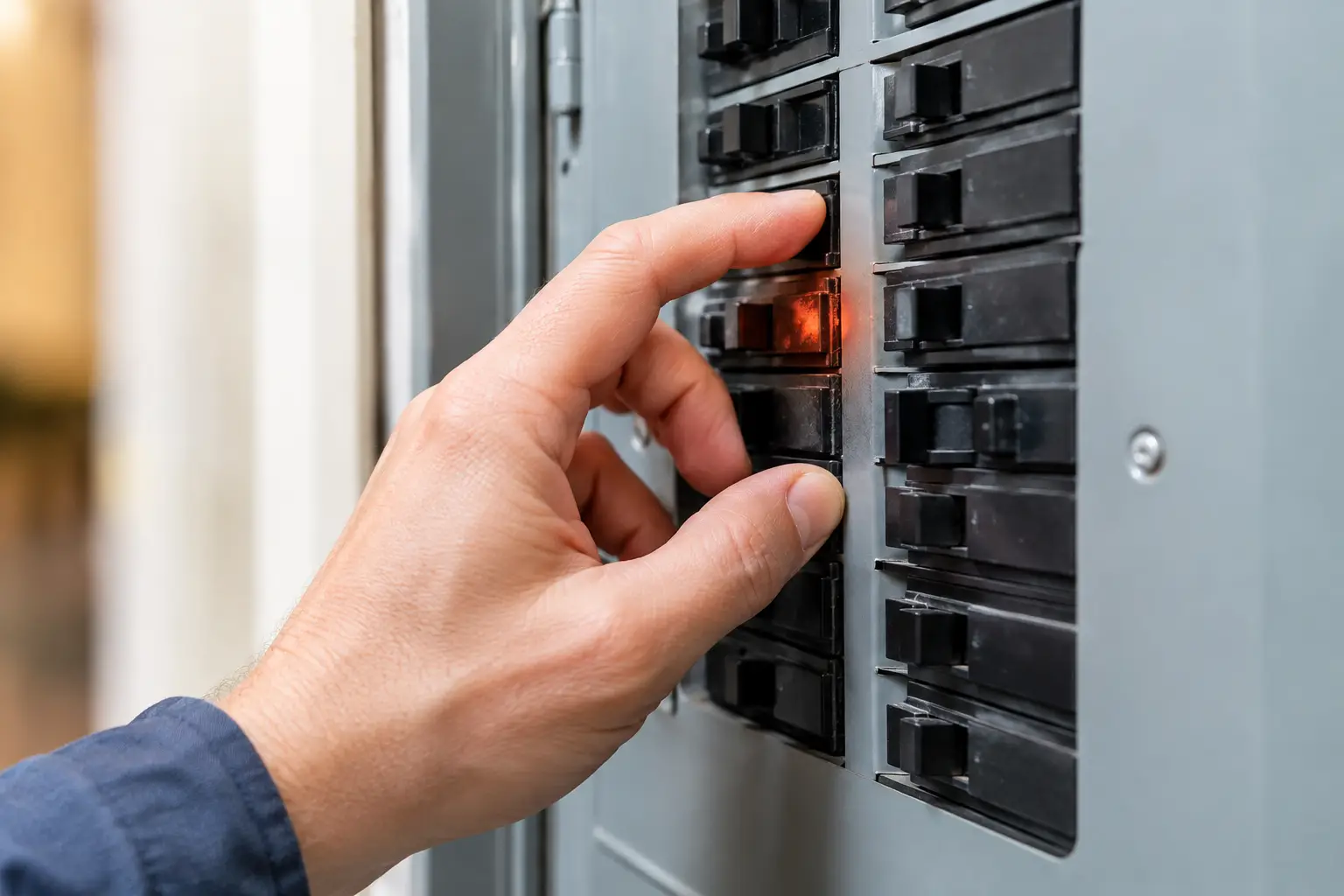
A circuit breaker can feel slightly warm when it is carrying power, especially after appliances have been running. But if you are asking why breaker feels hot, the answer may be more serious than normal operation. A breaker that is too hot to touch comfortably, smells burned, hums, or trips repeatedly needs prompt attention. Heat can point to an overloaded circuit, a loose connection, or a failing breaker – all problems that can damage your electrical panel or create a fire risk.
The safest rule is simple: do not remove the panel cover or try to tighten electrical connections yourself. You can take a few safe steps from outside the panel, but significant heat is a reason to stop using that circuit and contact a licensed electrician.
When a Warm Breaker Is Normal
Circuit breakers are safety devices, and they naturally produce some heat while electricity moves through them. A breaker supplying a busy kitchen circuit, a space heater, an air conditioner, or a clothes dryer may feel warm after sustained use. Warm is not automatically a failure.
The concern is the degree of heat. A breaker should not feel painfully hot or make you pull your hand away. It also should not heat up quickly under an ordinary load. If the panel door itself feels unusually hot near one breaker, treat that as a warning sign even if you do not touch the breaker directly.
Breakers are designed to trip when current stays too high for too long. If a breaker is heating but not tripping, it may still be operating under stress. That is why heat deserves attention before it becomes a full outage or a more dangerous problem.
Why a Breaker Feels Hot: The Most Common Causes
The circuit is overloaded
An overloaded circuit is the most common explanation. Every circuit has a limit. A typical 15-amp circuit can safely serve lights and everyday electronics, but adding high-draw appliances can push it too far. Portable heaters, microwaves, toaster ovens, hair dryers, window air conditioners, and shop tools are frequent culprits.
For example, a kitchen outlet circuit may work normally until a toaster oven and coffee maker run at the same time. The breaker may become hot before it trips. The same thing can happen when a space heater shares a bedroom circuit with a television, computer, and gaming console.
A connection inside the panel is loose
Electricity moving through a loose connection creates resistance. Resistance creates heat. A loose wire at the breaker, a weak connection where the breaker clips onto the panel bus bar, or a damaged internal component can all cause a single breaker to run hot.
This is not a homeowner repair. The danger is that the heat is often concentrated behind the panel cover, where you cannot see early damage. An electrician can inspect the breaker, wire termination, and panel components safely.
The breaker is worn out or defective
Breakers do not last forever. Age, frequent tripping, corrosion, power surges, and years of heavy use can weaken their internal parts. A failing breaker may feel hot even when the circuit is not heavily loaded. It may also trip too easily, refuse to reset, make a buzzing sound, or stay on when it should trip.
Replacing a breaker may sound straightforward, but the correct replacement must match the panel manufacturer, breaker type, and circuit rating. An incorrect breaker can create a poor connection and make the heat problem worse.
The appliance or wiring has a fault
Sometimes the breaker is reacting to a problem farther down the circuit. A damaged extension cord, failing appliance, loose outlet connection, or deteriorated wiring can pull excessive current or create resistance. In that case, replacing the breaker alone will not solve the underlying issue.
Think about what was running when you noticed the heat. If the issue appears only when a particular appliance is plugged in, unplug that appliance and leave it unplugged until it can be inspected or replaced. Do not keep testing a suspected appliance by repeatedly turning the breaker back on.
Heat from nearby breakers or the panel environment
A crowded panel can transfer heat from one heavily used breaker to another. This is more likely if several large appliances run at once, such as an electric range, dryer, HVAC equipment, or electric vehicle charger. A hot garage, utility room, or poorly ventilated location may also make the panel warmer overall.
Even so, environmental heat should not be used to explain away a breaker that is painfully hot, discolored, or showing other warning signs. Related: How to Replace Smoke Detector Battery Safely
Warning Signs That Mean Stop Using the Circuit
Turn the affected breaker off if you can do so without touching a hot area or opening the panel. Then leave it off and call a licensed electrician promptly if you notice any of these signs:
- A burning, fishy, or melting-plastic smell near the panel
- Scorch marks, discoloration, melted plastic, or a warped breaker
- Buzzing, crackling, sizzling, or popping sounds
- A breaker that is too hot to touch briefly or heats up while little is running
- Smoke, sparks, or a panel that feels hot across a large area
If you see smoke or sparks, hear active arcing, or smell strong burning, move people away from the area and call 911. Do not spray water on an electrical panel. If it is safe to do so, you may turn off the main breaker, but do not take risks to reach it.
Safe Checks You Can Do Without Opening the Panel
If there are no emergency warning signs and the breaker is only mildly warm, start by reducing the load. Switch off or unplug everything on that circuit, especially portable heaters and countertop appliances. Give the breaker time to cool, then consider what was in use before the problem started.
You can identify which rooms or outlets lose power when the breaker is off. This helps you spot common overload patterns. A single circuit may serve more outlets than expected, particularly in older homes. It is easy to overload a garage, bedroom, or kitchen circuit when several devices are running at once.
Next, inspect accessible cords and plugs. Look for loose plugs, frayed cords, darkened outlet faces, or outlets that feel warm. Do not use any damaged cord or appliance. Also avoid extension cords and power strips for high-wattage appliances such as space heaters, microwaves, and window air conditioners.
If you reset the breaker after it has cooled, do it once and only after reducing the load. If it trips again, feels hot again, or will not reset normally, leave it off. Repeated resets do not fix an overload or a wiring fault. They can allow a dangerous condition to continue.
What Not to Do With a Hot Breaker
Do not remove the panel cover, tighten screws, swap breakers, or add a larger breaker to stop tripping. A larger breaker does not give old wiring more capacity. It can allow the wire to overheat before the breaker responds. Related: Home Electrical Panel Labeling Guide for Safer Fixes
Do not ignore a breaker simply because it has not tripped. A loose connection may generate damaging heat without immediately exceeding the breaker’s current limit. And do not rely on a fan or open panel door to cool the area. Cooling the surface does not correct the electrical cause.
It is also wise to avoid running major appliances on that circuit until the issue is clear. Moving a high-draw appliance to a different properly rated outlet may be a short-term option, but only if you know it is on a separate circuit and are not creating a new overload elsewhere.
When an Electrician Should Inspect the Panel
Call an electrician when a breaker repeatedly becomes hot, trips under a normal load, shows physical damage, or has a burning smell. You should also call if the problem began after installing a new appliance, completing a renovation, or adding equipment such as a hot tub, EV charger, or large air conditioner.
An electrician can measure the circuit load, inspect connections, check for overheating at the bus bar, test the breaker, and evaluate whether the circuit needs repair or an upgrade. In older homes, the right solution may be a dedicated circuit for a heavy appliance rather than another replacement breaker.
A hot breaker is not always an emergency, but it is never a good reason to wait and see for weeks. Reducing the load and knowing when to stop are practical ways to protect your home. When heat is more than mild or comes with any warning sign, leave the circuit off and let a qualified electrician find the cause before you rely on it again.
Visit electrical guides for more step-by-step guides.
Frequently Asked Questions
What causes Why Breaker Feels Hot and What You Should Do?
This issue is usually caused by wiring problems, overloaded circuits, or faulty electrical components.
How to fix Why Breaker Feels Hot and What You Should Do?
Start by checking the breaker panel, then inspect outlets, switches, and wiring connections carefully. Related: An Outage Troubleshooting Success Story at Home
Is Why Breaker Feels Hot and What You Should Do dangerous?
Yes, it can be dangerous if ignored. Electrical issues can lead to fire risks or equipment damage.
Circuit Fixer provides expert electrical troubleshooting guides for homeowners in the USA.
Learn more about us at Circuit Fixer.
Author: Circuit Fixer Team
Expert Insight
This guide was created by the Circuit Fixer Team, specializing in electrical troubleshooting and home wiring solutions in the USA.
Our team works with real-world electrical issues including GFCI outlets, circuit breakers, and wiring faults.
Reviewed by: Electrical Safety Specialist

