

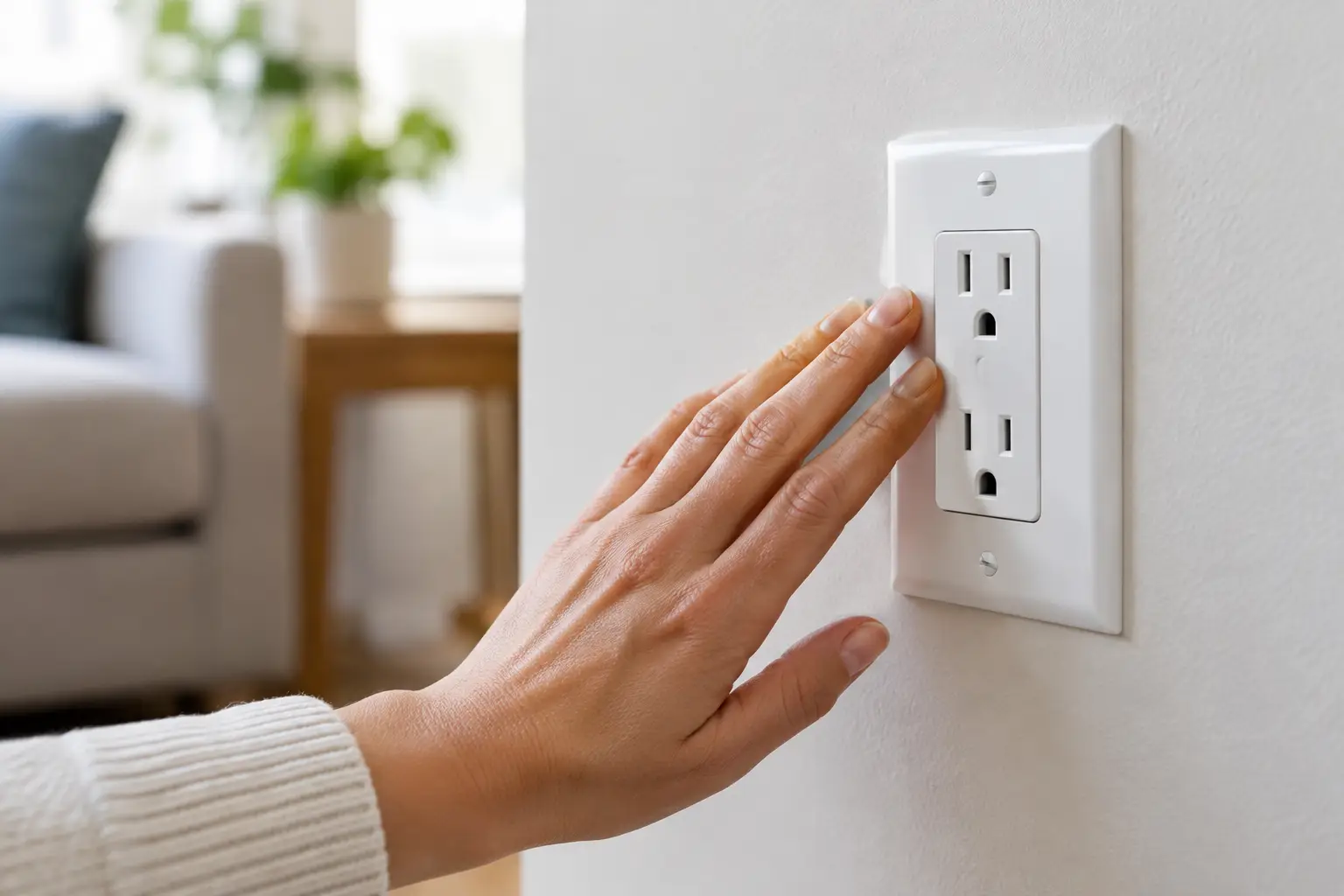
A phone charger that feels slightly warm is one thing. A wall outlet that feels warm when you rest your hand on its faceplate is another. If your outlets are warm to touch, treat the issue as a warning sign, not a nuisance to put off until later. Heat means electricity may be meeting resistance somewhere it should not, and that resistance can damage the outlet, wiring, or connected appliance.
The good news is that you can take a few safe first steps without opening an electrical box or touching any wiring. The goal is simple: stop using the affected outlet, identify obvious causes, and know when the problem requires a licensed electrician.
Is a Warm Outlet Ever Normal?
In most cases, the outlet faceplate and the plug should feel cool or close to room temperature. A little warmth from a large charging block, power adapter, or plug-in device can be normal because those products convert electricity and create some heat. But the receptacle itself should not feel noticeably warm.
Pay attention to where the heat is coming from. If only a bulky charger feels warm while the outlet faceplate stays cool, unplug the charger and let it cool. Try that device in another known-good outlet later. If the outlet faceplate, the plug blades, or the wall around the outlet feels warm, do not keep testing it with different appliances.
A warm outlet becomes more urgent when it is hot enough that you pull your hand away, when the plastic looks discolored, or when you notice a burning smell, buzzing, crackling, sparks, or a loose plug. Those signs point to a potentially dangerous connection. Related: How to Identify a Tripped GFCI Outlet Safely
What to Do When Outlets Are Warm to Touch
Start by unplugging anything connected to the outlet. Pull on the plug body, not the cord. Do not use that receptacle again until you understand why it heated up.
If the outlet is very hot, smells burnt, makes noise, shows scorch marks, or produces smoke, go to your electrical panel and turn off the breaker that controls it if you can do so safely. Keep everyone away from the area. If there is smoke or an active fire, leave the home and call 911. Do not spray water on an electrical fire.
For a mildly warm outlet with no burning odor or visible damage, leave it unused and check what was plugged into it. A space heater, portable air conditioner, microwave, hair dryer, toaster oven, vacuum, or power strip loaded with several devices can put substantial demand on a circuit. The appliance may be the trigger, but a healthy outlet should still be able to handle its intended load without overheating.
Do not try to solve the problem by installing a higher-amp breaker, replacing the outlet yourself while the circuit is live, or adding another extension cord. Those actions can hide the warning while increasing the risk.
Common Reasons an Outlet Gets Warm
An overloaded circuit
Overloading happens when too many power-hungry devices share one circuit. This is especially common in older homes, garages, kitchens, bedrooms with window air conditioners, and living rooms where an entertainment center shares power with heaters or lamps.
Most household circuits are rated at 15 or 20 amps. A 15-amp circuit has a maximum capacity of 1,800 watts, but sustained use should generally stay below 1,440 watts. A single 1,500-watt space heater can use nearly all of that practical capacity. Add a television, game console, or lamp, and the outlet or wiring connections may heat up before the breaker trips.
A breaker that has not tripped does not prove everything is safe. Breakers protect against excessive current, but heat can also come from a poor connection at the outlet. Related: Breaker Reset vs Replacement: Which Is Safe?
Loose or worn connections
A loose wire connection behind the outlet creates electrical resistance. Resistance creates heat, often at the exact point where the wire attaches to the receptacle. A loose plug fit can create a similar problem at the contact points inside the outlet.
Signs of a worn outlet include plugs that fall out easily, plugs that wiggle noticeably, intermittent power, or a crackling sound when you move a plug. These are not situations for tape, shims, or repeated use. The receptacle and possibly its wiring connections need professional inspection and repair.
A failing appliance, cord, or power strip
The outlet may not be the original problem. Damaged cords, loose plugs, cheap adapters, and overloaded power strips can all generate heat. Look for fraying, bent prongs, dark marks, melted plastic, or a power strip that feels warm along its length.
Unplug and replace damaged accessories. Never use a cord with exposed wire or a plug with heat damage. If the same appliance causes multiple outlets to warm up, stop using the appliance and have it evaluated or replaced.
Old wiring or an incorrectly installed outlet
Older homes can have aging receptacles, brittle insulation, aluminum branch-circuit wiring, or connections that were made poorly during a past repair. A warm outlet may also result from an outlet that was backstabbed, improperly tightened, or installed with an incompatible device.
You cannot confirm these issues by looking at the faceplate. A licensed electrician can shut off power, test the circuit, inspect the connections, and determine whether the problem is isolated to one receptacle or part of a larger wiring issue.
Safe Checks Homeowners Can Make
Once the outlet has cooled and nothing is plugged into it, look closely without removing the cover plate. Check for discoloration, cracks, soot, melted plastic, or a plug that does not sit firmly in the receptacle. Also think back to what was running when you noticed the warmth.
Next, check your electrical panel for a tripped breaker. A breaker may sit between the ON and OFF positions when it trips. To reset it, move it fully to OFF first, then back to ON. Only do this if there are no signs of burning, smoke, or outlet damage. If the breaker trips again, leave it off. Repeated resets can damage equipment and increase fire risk.
You can also reduce the load on that circuit by moving high-wattage appliances to separate circuits, not merely to a different outlet across the same room. Outlets in nearby rooms can still share one breaker. CircuitFixer recommends making a simple breaker map for your home so you know which rooms and outlets belong together.
Avoid removing the outlet cover, pushing tools into the slots, or tightening wiring yourself unless you are trained and qualified to do that work. The useful homeowner task here is observation and isolation, not internal electrical repair.
When to Call an Electrician Right Away
Call a licensed electrician promptly if the outlet remains warm with nothing plugged in, if it heats up again after you reduce the load, or if plugs fit loosely. You should also call for help if you find discoloration, melting, a burning odor, buzzing, sparks, frequent breaker trips, flickering lights, or loss of power on part of the circuit.
An electrician should also inspect any warm outlet in a home with known aluminum wiring, very old electrical equipment, or a recent water leak near the wall. Water and electricity are a particularly unsafe combination, even after a surface appears dry.
If the issue started after a new appliance was installed, tell the electrician what appliance was running and which outlets or lights were affected. That detail can speed up diagnosis and help separate an appliance problem from a circuit problem.
Preventing Heat Problems at Your Outlets
Give high-wattage appliances their own appropriate outlet whenever possible. Space heaters should plug directly into a wall outlet, not a power strip or extension cord. The same goes for portable air conditioners and other major plug-in appliances unless the manufacturer specifically approves another setup.
Replace outlets that no longer grip plugs securely, and replace aging power strips rather than treating them as permanent wiring. Use surge protectors for electronics when appropriate, but remember that a surge protector does not increase a circuit’s capacity.
A warm outlet is your home asking for attention before a small fault becomes a costly repair. Trust that signal, stop using the outlet, and bring in a licensed electrician whenever the cause is not clearly limited to a removable device.
Related: How to Find a Lost Power Source at Home Safely
Check out more electrical solutions on electrical guides.
Frequently Asked Questions
What causes Why Are Outlets Warm to the Touch at Home??
This issue is usually caused by wiring problems, overloaded circuits, or faulty electrical components.
How to fix Why Are Outlets Warm to the Touch at Home??
Start by checking the breaker panel, then inspect outlets, switches, and wiring connections carefully.
Is Why Are Outlets Warm to the Touch at Home? dangerous?
Yes, it can be dangerous if ignored. Electrical issues can lead to fire risks or equipment damage.
Circuit Fixer provides expert electrical troubleshooting guides for homeowners in the USA.
Learn more about us at Circuit Fixer.
Author: Circuit Fixer Team
Expert Insight
This guide was created by the Circuit Fixer Team, specializing in electrical troubleshooting and home wiring solutions in the USA.
Our team works with real-world electrical issues including GFCI outlets, circuit breakers, and wiring faults.
Reviewed by: Electrical Safety Specialist

