

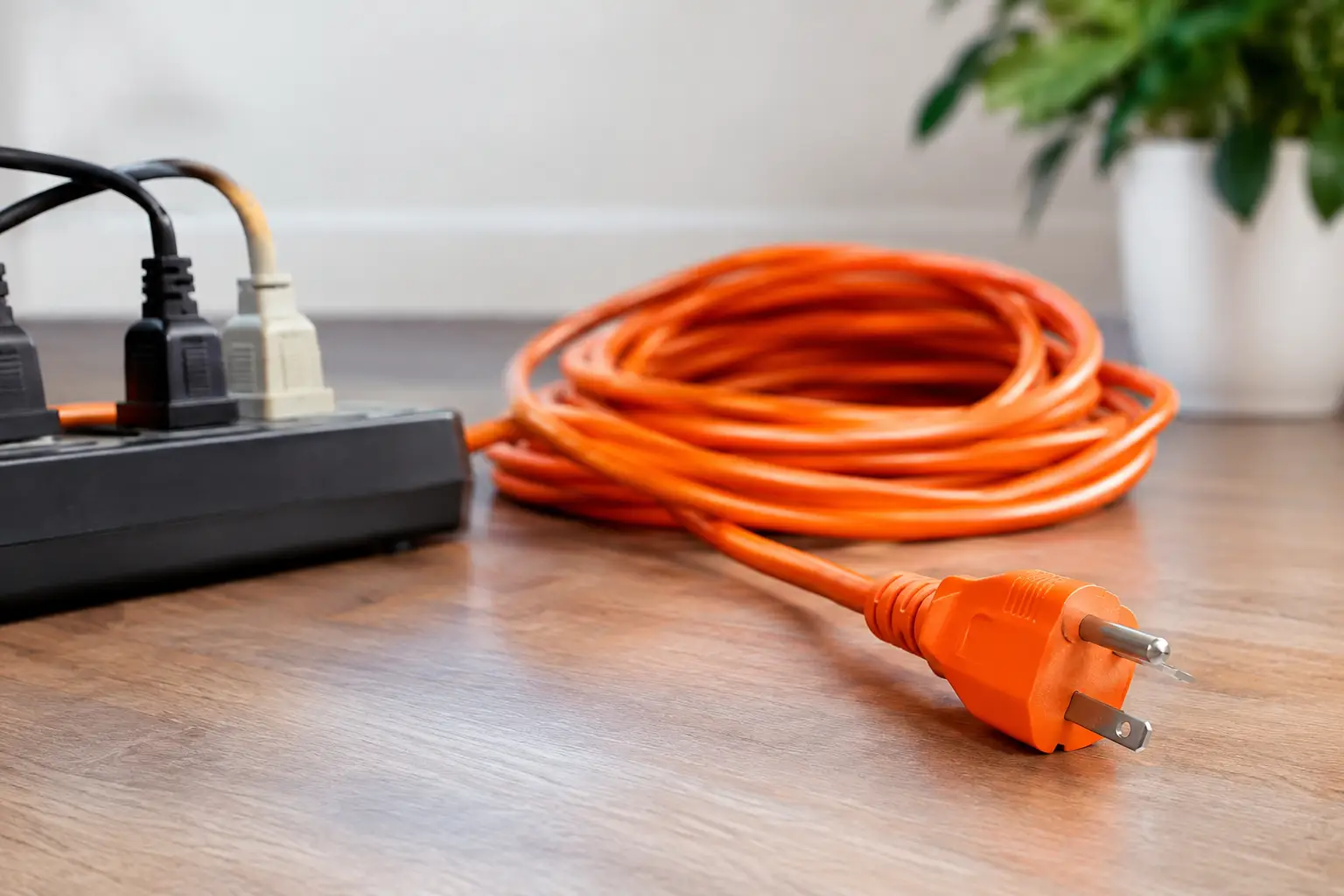
A space heater running through a thin extension cord may seem harmless at first. Then the cord feels warm, the plug is difficult to remove, or you notice a faint hot-plastic smell. Can extension cords overheat? Yes. And when they do, they can damage outlets, trip a breaker, or create a serious fire risk.
The good news is that overheating usually has a recognizable cause: too much electrical load, the wrong type of cord, a damaged connection, or a cord that cannot release heat. Homeowners can often spot the problem quickly and make a safer choice before it becomes an emergency.
Can Extension Cords Overheat Under Normal Use?
An extension cord should not become hot during normal use. It may feel slightly warm when powering a moderate load, especially over a long distance, but it should never feel uncomfortably hot, smell burnt, soften, discolor, or make crackling sounds.
A cord overheats when electrical resistance turns too much energy into heat. Every cord has some resistance, but a properly sized, undamaged cord carrying an appropriate load keeps that heat at a safe level. Problems begin when the cord is too small for the appliance, too long for the job, damaged, tightly covered, or connected poorly at either end.
Heat is not something to ignore just because the appliance still works. A cord can continue delivering power while its insulation and plug connections are deteriorating.
Warning Signs of an Overheating Extension Cord
Trust what you see, smell, and feel. Stop using an extension cord if you notice a burning odor, melted or soft plastic, dark marks on the plug blades, a loose plug, frayed insulation, or a cord that feels hot to the touch.
Also pay attention to the outlet. If the outlet cover is warm, discolored, cracked, or loose, the issue may be the receptacle rather than the cord. A worn outlet can fail to grip plug blades tightly, creating resistance and heat at the connection point.
If you hear buzzing, popping, or crackling, disconnect the equipment if you can do so without touching a hot plug or damaged area. Turn off the circuit breaker if the outlet or plug is hot, smoking, or showing burn marks. Do not keep testing the setup to see whether the problem returns.
Why Extension Cords Overheat
The appliance draws more power than the cord can handle
This is the most common cause. High-wattage appliances need a heavy-duty cord rated for their electrical demand. Space heaters, portable air conditioners, microwaves, toaster ovens, hair dryers, shop vacuums, power tools, and electric grills can pull substantial current.
A light-duty household cord might handle a lamp, phone charger, or small fan well. It is not automatically safe for a heater or major appliance. Check both labels before connecting anything. The extension cord should be rated for at least the appliance’s amperage or wattage, and the appliance instructions may say that an extension cord should not be used at all.
At normal household voltage, watts equal volts multiplied by amps. For example, a 1,500-watt heater draws about 12.5 amps on a 120-volt circuit. That is a heavy load for many common extension cords, particularly long or thin ones.
The cord is too thin or too long
Wire thickness is identified by American Wire Gauge, or AWG. The lower the gauge number, the thicker the wire. A 12-gauge cord carries more current with less voltage drop than a 16-gauge cord.
Length matters, too. Electricity traveling through a longer cord encounters more resistance. That means a 100-foot cord may need to be heavier than a 25-foot cord powering the same tool. Use the shortest cord that safely reaches your equipment, and choose the cord based on its printed rating rather than appearance alone.
The cord is coiled, covered, or pinched
A cord needs to release the heat it produces. When it is tightly coiled on a reel, buried under a rug, tucked beneath furniture, wrapped in blankets, or trapped in a door or window, heat can build up faster.
Covering a cord also makes damage harder to notice. Avoid running extension cords under rugs or through walls, ceilings, floors, or doorways. Standard extension cords are temporary power solutions, not permanent wiring.
A damaged plug or loose connection creates heat
Bent plug blades, cracked insulation, crushed sections, and exposed wire all create hazards. So can a loose outlet. When metal contacts do not fit tightly together, electricity has to pass through a smaller, less reliable connection. That creates resistance, and resistance creates heat.
Do not bend plug blades back into shape or wrap a damaged cord with electrical tape and put it back into service. Replace the cord. If several plugs feel loose in the same outlet, or the outlet looks scorched, have a qualified electrician inspect and replace the receptacle. Related: How to Inspect Damaged Extension Cords Safely
Multiple cords or power strips are connected together
Daisy-chaining extension cords adds length, resistance, and more plug connections that can loosen or overheat. Plugging one power strip into another creates similar risks and can overload the first strip or the wall outlet.
Use one properly rated extension cord when temporary power is necessary. If you routinely need more outlets in one area, the safer long-term answer is usually adding a properly installed receptacle, not building a chain of cords. Related: How to Find a Lost Power Source at Home Safely
What to Do If an Extension Cord Gets Hot
First, turn off the appliance. If the plug and outlet are cool enough to handle safely, unplug by gripping the plug itself, never by pulling the cord. Let the equipment and cord cool completely.
Next, inspect the cord in good lighting. Look along its full length, not just at the ends. If you see damage, smell burning, or find melted plastic, discard the cord and replace it. Do not reuse it for a smaller appliance.
Then check the appliance label and the extension cord label. Compare amps to amps or watts to watts. The cord’s rating must meet or exceed the appliance’s requirement. If the appliance is a heater, air conditioner, refrigerator, microwave, or another major appliance, use a dedicated wall outlet whenever possible. Many manufacturers specifically prohibit extension cord use for these products.
Finally, check the outlet after the cord has been removed. A hot outlet, darkened faceplate, loose receptacle, or repeated breaker trip points to a wiring or outlet problem that needs professional attention. Resetting a breaker without addressing the load or damaged connection can allow the problem to continue.
How to Choose a Safer Extension Cord
Start with the load, then choose the cord. Read the appliance label for its amps or watts, and read the cord packaging or jacket for its maximum rating. Never assume a thicker-looking cord is suitable.
For high-demand tools or appliances, choose a heavy-duty cord with a lower AWG number and an adequate rating for the cord length. For outdoor jobs, use a cord marked for outdoor use. Outdoor-rated cords have insulation designed to handle moisture, sunlight, and tougher conditions, but they still should be protected from standing water and physical damage.
Use grounded, three-prong cords for grounded appliances. Never remove the grounding pin to fit a two-slot outlet. That pin is a safety feature, not an inconvenience.
For loads that run for several hours, leave extra capacity rather than operating at the cord’s maximum rating. Electrical equipment can warm up over time, and a cord used all day in a hot garage has less margin than one used briefly in a cool room.
When a Breaker Trips Along With a Hot Cord
A tripped breaker may be doing exactly what it is supposed to do: stopping an overloaded or faulty circuit. Before resetting it, unplug the appliance and extension cord. Inspect both for damage and make sure the cord rating matches the load.
If the breaker trips again after you remove the extension cord, or if it trips with ordinary household loads, the issue may involve the circuit, outlet, or appliance. Leave the breaker off if you see or smell signs of overheating, and arrange for a qualified electrician to diagnose the cause. Related: Are GFCI Required in Your Home? Room by Room
A safe extension cord setup should fade into the background. If a cord feels hot, smells odd, trips a breaker, or forces you to make compromises, treat that as your home telling you the setup needs to change.
Check out more electrical solutions on Circuit Fixer.
Frequently Asked Questions
What causes Can Extension Cords Overheat? Safety Signs?
This issue is usually caused by wiring problems, overloaded circuits, or faulty electrical components.
How to fix Can Extension Cords Overheat? Safety Signs?
Start by checking the breaker panel, then inspect outlets, switches, and wiring connections carefully.
Is Can Extension Cords Overheat? Safety Signs dangerous?
Yes, it can be dangerous if ignored. Electrical issues can lead to fire risks or equipment damage.
Circuit Fixer provides expert electrical troubleshooting guides for homeowners in the USA.
Learn more about us at Circuit Fixer.
Author: Circuit Fixer Team
Expert Insight
This guide was created by the Circuit Fixer Team, specializing in electrical troubleshooting and home wiring solutions in the USA.
Our team works with real-world electrical issues including GFCI outlets, circuit breakers, and wiring faults.
Reviewed by: Electrical Safety Specialist

