

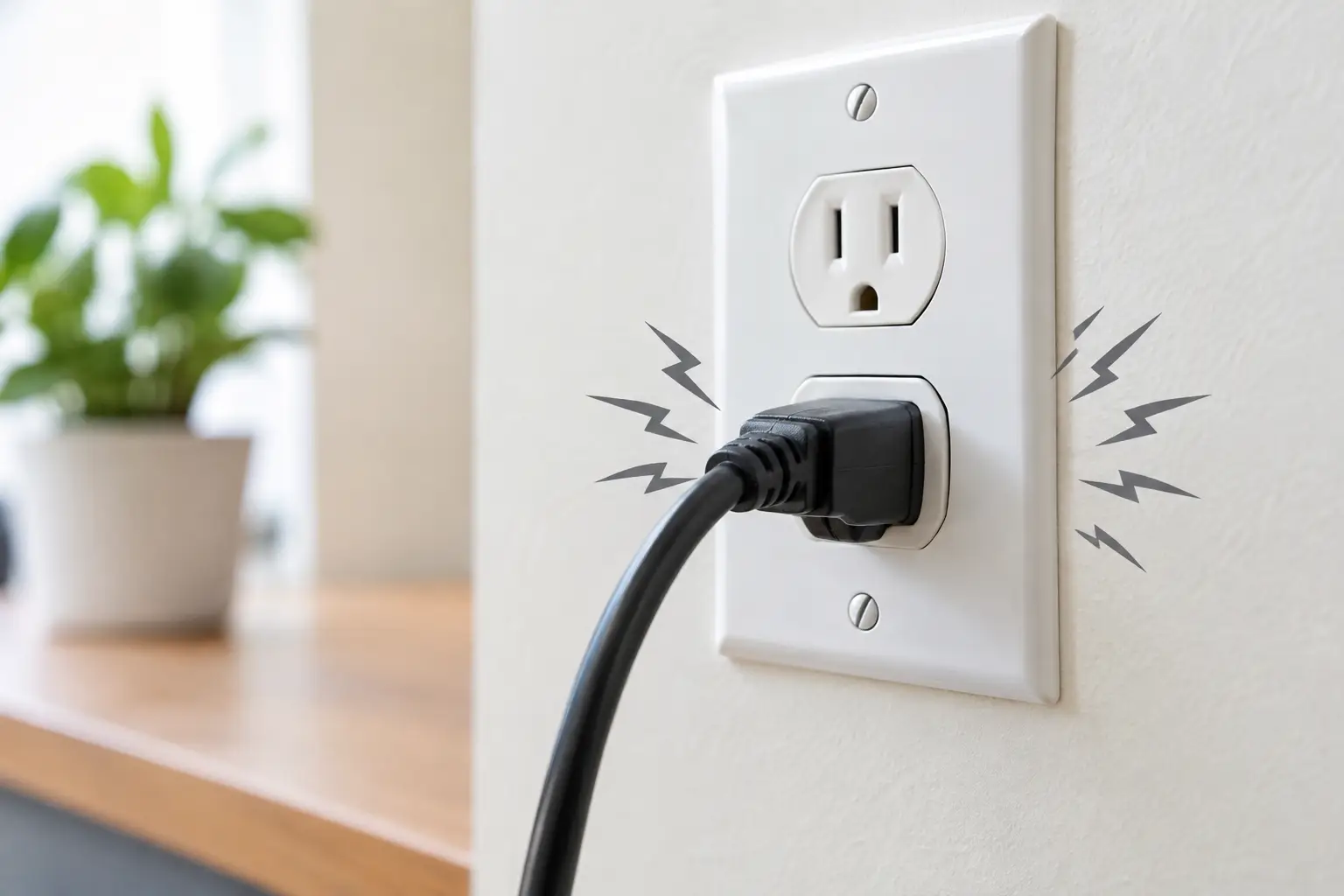
A quiet electrical system should stay quiet. If you hear a hum, buzz, crackle, or sizzle near a wall outlet, do not treat it as normal house noise. Understanding why outlets buzz can help you separate a harmless sound from a loose connection or overheating problem that needs prompt attention.
The key question is not only what the outlet sounds like, but when it makes the sound. Does it buzz only when a particular device is plugged in? Does it continue after everything is unplugged? Is the outlet warm, discolored, or loose in the wall? Those details point to the right next step.
Why Outlets Buzz: The Most Common Causes
An outlet can make noise for several reasons, but electricity itself does not usually create a noticeable buzz in a healthy receptacle. The sound usually comes from vibration, a failing component, or electricity jumping across a poor connection.
A loose wire connection
A loose wire behind an outlet is one of the more serious reasons for buzzing. When a wire is not firmly connected to the outlet terminal, electrical current can move unevenly through the connection. That can create heat and small electrical arcs, which may sound like buzzing, crackling, or sizzling.
Loose connections can develop as outlets age, after heavy use, or when an outlet was installed improperly. This is not a repair to test by repeatedly plugging devices in and out. A loose connection can worsen under load and may damage the outlet, wiring, or insulation inside the wall.
A worn or damaged receptacle
Outlets wear out. The metal contacts inside a receptacle are designed to grip plug prongs firmly. Over time, they can loosen, corrode, or become damaged. A loose plug can create an inconsistent connection that produces a faint buzz, especially when powering a higher-wattage appliance. Related: Are GFCI Required in Your Home? Room by Room
Look for warning signs without touching the outlet itself: a plug that falls out easily, scorch marks around the slots, melted plastic, a burning odor, or an outlet cover that feels unusually warm. Any of these signs means the outlet should be taken out of service until it can be inspected.
Too much demand on one circuit
A buzzing outlet may occur when too many devices are drawing power from the same circuit. Space heaters, air fryers, hair dryers, microwaves, portable air conditioners, and power tools can place a heavy load on household wiring. If several high-demand appliances share one circuit, weak connections are more likely to heat up and make noise.
An overloaded circuit does not always trip the breaker immediately. A breaker is there to prevent excessive current, but a poor connection at one outlet can still generate heat at a lower level than the breaker’s trip threshold. That is why a buzzing outlet deserves attention even when the lights are still on and the breaker has not tripped.
The plugged-in device, not the outlet
Sometimes the outlet is innocent. Phone chargers, LED light drivers, smart plugs, laptop power supplies, and certain appliances can make a low electrical hum. This is often caused by internal components vibrating as they handle power.
To narrow it down, unplug the device by gripping the plug, not the cord. If the sound stops immediately and returns only when that same device is connected, try the device in another known-good outlet. If it buzzes there too, stop using the device and replace it or have it serviced. If the original outlet continues to buzz with nothing connected, treat the outlet as the problem.
A dimmer switch or nearby electrical equipment
Not every sound near an outlet comes from the outlet. Older dimmer switches can hum, particularly when used with incompatible LED bulbs. A buzzing sound may also come from a nearby transformer, doorbell unit, HVAC control, or electrical panel.
Listen carefully from a safe distance to identify the source. Never remove an outlet cover, switch cover, or breaker panel cover just to investigate a sound. The wiring behind those covers can be live even when a device is switched off.
What to Do When an Outlet Starts Buzzing
Start with caution. A buzzing outlet is not a problem to ignore while you wait for a more convenient time, especially if the sound is new or getting louder.
Take these steps:
- Unplug anything connected to the outlet, using dry hands and gripping the plug.
- Stop using the outlet if buzzing continues after devices are unplugged.
- Check for heat, discoloration, smoke, a burning smell, loose plugs, or flickering power nearby without touching exposed metal parts.
- Turn off the circuit breaker for that outlet if you notice any warning signs or cannot confidently identify the cause.
- Contact a licensed electrician for a buzzing outlet that continues, feels warm, shows damage, or is paired with a burning smell or repeated breaker trips.
If you see smoke, sparks, or flames, move people away from the area and call 911. Do not spray water on an electrical fire. If it is safe to do so, shut off power at the main breaker only if you can reach it without passing through smoke, fire, or standing water.
When You May Be Able to Troubleshoot Safely
Homeowners can safely make a few observations, but there is a clear line between basic troubleshooting and electrical repair. You can unplug a suspect device, reduce the number of items on a circuit, and check whether a tripped breaker has moved to the middle or off position.
If a breaker has tripped, turn it fully to OFF before resetting it to ON. Then use the circuit normally, but avoid plugging several high-wattage appliances into outlets on the same circuit. If the breaker trips again or the outlet resumes buzzing, leave the breaker off and arrange for professional service.
A GFCI outlet, commonly found in kitchens, bathrooms, garages, basements, and outdoor areas, may also trip and cut power to other outlets. Pressing RESET is reasonable if the outlet is dry, undamaged, and not buzzing. But a GFCI that will not reset, trips repeatedly, or makes noise should not be forced back into service. Related: Breaker Reset vs Replacement: Which Is Safe?
Do not attempt to tighten outlet screws, move wires, replace a receptacle, or remove a cover plate unless you have the proper knowledge, tools, and ability to verify power is off. Turning off a breaker reduces risk, but mislabeled panels and shared circuits are common in older homes. For most homeowners, a buzzing outlet is a good reason to bring in a licensed electrician rather than make a first-time wiring repair.
Why a Buzzing Outlet Can Become a Bigger Problem
Electrical problems often give small warnings before they become obvious. A faint buzz can indicate resistance at a connection. Resistance creates heat, and heat can damage wire insulation, plastic outlet parts, and connections inside an electrical box. As parts deteriorate, the problem can become intermittent, which makes it tempting to dismiss. Related: Extension Cord Safety: A Homeowners Guide
That is the trade-off: a quiet, brief hum from a charger may be a device issue, while a persistent buzz from a wall receptacle can signal a fire risk. You do not need to diagnose every internal component to make a safe decision. If the sound is coming from the outlet itself, or you are unsure where it is coming from, stop using that circuit until it is checked.
For future prevention, avoid overloading power strips, replace outlets that no longer hold plugs securely, and give high-demand appliances their own properly rated circuit whenever possible. Electrical systems last longer when connections stay tight and circuits are used within their limits.
A buzzing outlet is your home asking for attention. Respond early, keep the area out of use, and let a qualified electrician handle anything beyond simple device and breaker checks.
Visit Circuit Fixer homepage for more step-by-step guides.
Frequently Asked Questions
What causes Why Outlets Buzz and When You Should Worry?
This issue is usually caused by wiring problems, overloaded circuits, or faulty electrical components.
How to fix Why Outlets Buzz and When You Should Worry?
Start by checking the breaker panel, then inspect outlets, switches, and wiring connections carefully.
Is Why Outlets Buzz and When You Should Worry dangerous?
Yes, it can be dangerous if ignored. Electrical issues can lead to fire risks or equipment damage.
Circuit Fixer provides expert electrical troubleshooting guides for homeowners in the USA.
Learn more about us at Circuit Fixer.
Author: Circuit Fixer Team
Expert Insight
This guide was created by the Circuit Fixer Team, specializing in electrical troubleshooting and home wiring solutions in the USA.
Our team works with real-world electrical issues including GFCI outlets, circuit breakers, and wiring faults.
Reviewed by: Electrical Safety Specialist

