

A sparking outlet, a burning smell near the panel, or water moving toward electrical equipment changes the priority fast. Knowing how to shut off main power can limit danger while you get the right help. It is a simple action, but it is not the answer to every power problem – and it should never put you in harm’s way.
For most homeowners, turning off the main breaker is a safe, practical step when conditions are dry and the electrical panel is accessible. The goal is not to repair damaged wiring yourself. The goal is to remove power from the home or affected system so you can avoid a worsening electrical hazard.
When You Should Shut Off Main Power
The main breaker cuts electricity to the branch circuits in your home. That means outlets, lights, appliances, and many hardwired systems will stop receiving power. It is useful when you have a concern that affects more than one circuit or could make the electrical system unsafe.
Shut off the main breaker if you notice a persistent burning odor coming from the panel or wiring, smoke or visible sparking at the panel, significant water leaking onto or into electrical equipment, or storm damage that has exposed service equipment. It is also reasonable to turn it off before a licensed electrician performs certain repairs, if they instruct you to do so.
A tripped breaker is different. If one bedroom outlet or one appliance stops working, you usually do not need to turn off the whole house. Start by checking the individual breaker that controls that area. Resetting a single tripped breaker may restore power, but only after you unplug or stop using the item that likely caused the overload.
If you see flames, hear loud buzzing or crackling from the panel, smell strong smoke, or suspect someone has been shocked, do not approach the panel. Get everyone away from the area, call 911, and contact your utility company or a licensed electrician when it is safe to do so.
Find the Main Breaker Before an Emergency
Your electrical panel is commonly located in a garage, basement, utility room, laundry area, hallway, or on an exterior wall. In some homes, there is a main panel plus a smaller subpanel. The main breaker is usually in the main service panel, not the subpanel.
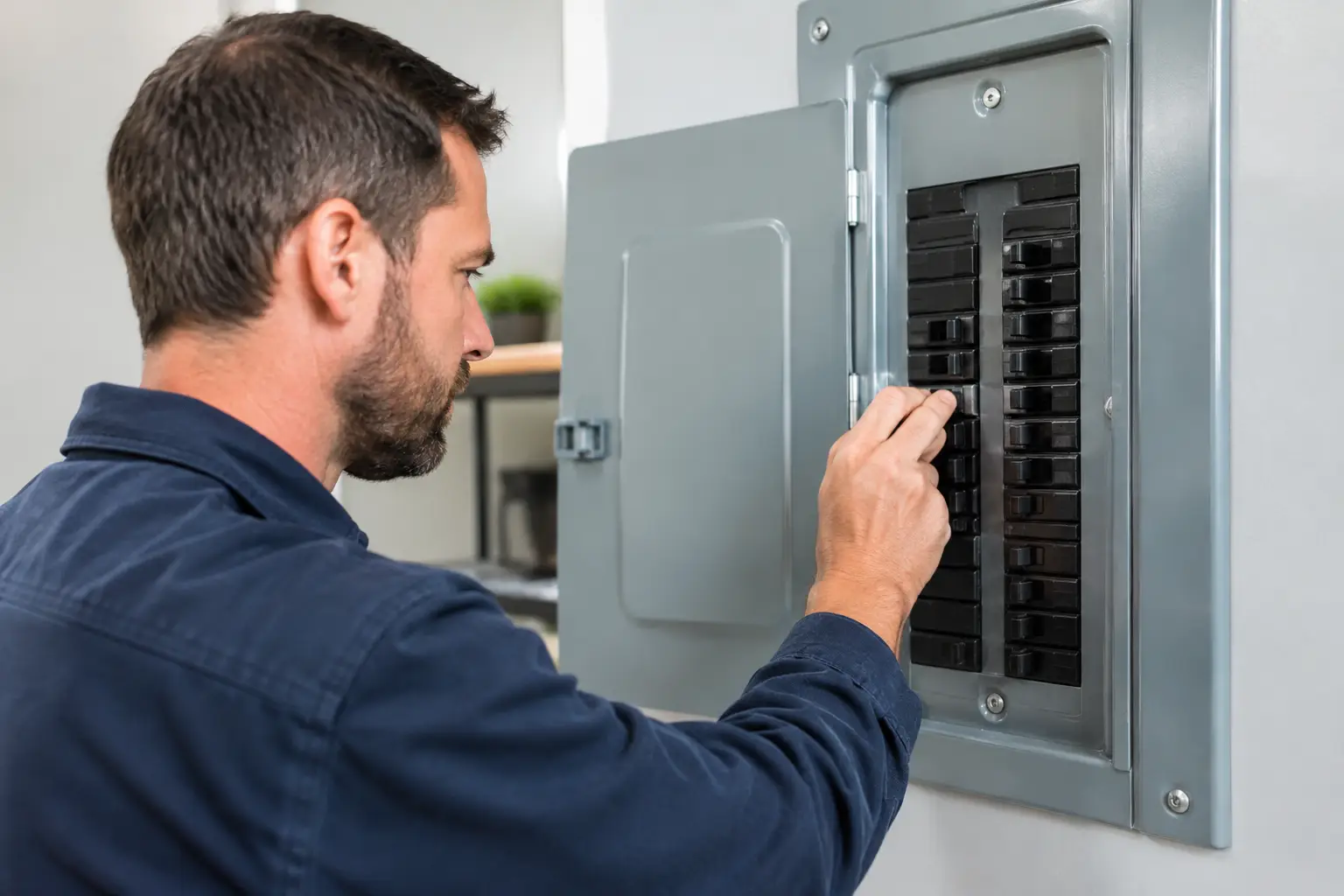
Open the panel door, not the metal cover secured by screws. Look for the largest breaker, often positioned at the top or bottom of the breaker rows. It may be labeled “Main,” “Service Disconnect,” or marked with a high amp rating such as 100, 150, or 200 amps. It often has a larger handle than the other breakers.
Do not assume every large switch is the main disconnect. Older homes, split-bus panels, outdoor service equipment, and panels with separate meter disconnects can be arranged differently. If the labels are missing or the setup is confusing, have an electrician identify the proper shutoff and label it clearly. That small project can save valuable time later.
Take a moment when there is no emergency to show other responsible adults in the household where the panel is. Keep the access path clear. A panel hidden behind storage boxes, shelving, or a locked door is harder to reach when a quick decision matters.
How to Shut Off Main Power Safely
Only proceed if the area around the panel is dry, well lit, and free of smoke, standing water, or visible damage. Wear dry shoes and stand on a dry floor. Do not touch the panel if your hands are wet, and do not use a flashlight with a damaged cord or electrical hazard nearby. A battery-powered flashlight is the safer choice during an outage.
Follow these steps:
- Turn off or unplug sensitive equipment if time and conditions allow. Computers, televisions, and major appliances do not have to be unplugged in an urgent situation, but doing so can reduce the chance of a surge when power returns.
- Open the panel door and identify the main breaker. Touch only the insulated breaker handle. Do not remove the panel cover or reach near exposed wires.
- Move the main breaker firmly to OFF. A breaker handle may need a deliberate push. If it will not move normally, do not force it or use tools.
- Confirm that the home has lost power. Lights and outlets should stop working. Remember that a battery backup system, generator, solar equipment, or certain emergency lights may still supply power to some areas.
- Leave the breaker off until the hazard is understood. If you shut it off because of heat, odor, water, damage, or repeated tripping, call a licensed electrician rather than turning it back on to “see if it works.”
The service conductors feeding the panel may remain energized even after the main breaker is off. That is why homeowners should never remove the panel’s front cover, also called the dead front, or attempt to inspect internal connections. The main breaker reduces power to household circuits. It does not make the inside of the service panel safe to handle.
What if the Main Breaker Has Tripped?
A main breaker that has moved to a middle position may have tripped because of an overload, a short circuit, or a problem with the panel or service equipment. Before resetting it, turn off or unplug as many large electrical loads as possible, including air conditioners, space heaters, electric ranges, dryers, and portable appliances.
To reset it, move the handle fully to OFF first, then firmly back to ON. If it trips again, stays loose, feels hot, makes noise, or you smell burning, leave it off. Repeated trips are a warning, not an inconvenience to work around. A licensed electrician should diagnose the cause. Related: Breaker Reset vs Replacement: Which Is Safe?
Situations Where You Should Not Touch the Panel
Good electrical troubleshooting starts with knowing when to stop. Do not attempt to shut off the main power at the panel if the panel is wet, damaged, hot, smoking, or making unusual sounds. Keep away if there are downed utility lines, floodwater, or signs that the meter or service cable has been damaged.
After a major storm, your utility may need to disconnect power from outside before repairs can happen. If a tree has pulled on the service line or the meter base is loose, stay clear of the equipment and report it to the utility. Never pull a meter, cut a service wire, or try to disconnect power outdoors yourself.
Homes with solar panels or battery storage need extra caution. Solar systems can continue generating electricity during daylight, and batteries can power selected circuits even when the main breaker is off. These systems should have labeled disconnects, but the correct shutdown sequence depends on the equipment. Follow the manufacturer’s posted instructions or call the installer or a qualified electrician.
Turning Power Back On Without Creating Another Problem
Once a licensed professional has confirmed it is safe, restoring power is usually straightforward. Make sure your hands and the floor are dry, and check that no one is working on wiring or equipment. Turn off individual branch breakers first if the electrician recommends it, then move the main breaker to ON.
Bring circuits back gradually, especially after an outage. Start with essential lighting and refrigeration, then add other breakers one at a time. This approach makes it easier to spot a circuit that immediately trips and reduces the demand from several large appliances starting at once.
After power returns, reset clocks, check smoke and carbon monoxide alarms, and look at appliances with digital displays. If a GFCI outlet has tripped, it may need to be reset separately. Do not reset a GFCI that will not hold or one serving a wet area with an active moisture problem.
Keep a Simple Electrical Emergency Plan
A few minutes of preparation makes this task far less stressful. Label every breaker as accurately as possible, keep a battery flashlight near the panel, and make sure household members know where the main disconnect is located. If you use a generator, review its instructions before an outage – never connect one to your home wiring without an approved transfer switch.
Electrical safety is not about being fearless or handling every repair alone. It is about taking the safe, useful step you can take, then recognizing when the next step belongs to a licensed professional. When you know where your main breaker is and when to use it, you are better prepared to protect your home and the people in it. Related: The Future of Residential Panels at Home
Related: Why Breaker Feels Hot and What You Should Do
For more expert guides, visit Circuit Fixer homepage.
Frequently Asked Questions
What causes How to Shut Off Main Power Safely at Home?
This issue is usually caused by wiring problems, overloaded circuits, or faulty electrical components.
How to fix How to Shut Off Main Power Safely at Home?
Start by checking the breaker panel, then inspect outlets, switches, and wiring connections carefully.
Is How to Shut Off Main Power Safely at Home dangerous?
Yes, it can be dangerous if ignored. Electrical issues can lead to fire risks or equipment damage.
Circuit Fixer provides expert electrical troubleshooting guides for homeowners in the USA.
Learn more about us at Circuit Fixer.
Author: Circuit Fixer Team
Expert Insight
This guide was created by the Circuit Fixer Team, specializing in electrical troubleshooting and home wiring solutions in the USA.
Our team works with real-world electrical issues including GFCI outlets, circuit breakers, and wiring faults.
Reviewed by: Electrical Safety Specialist

