

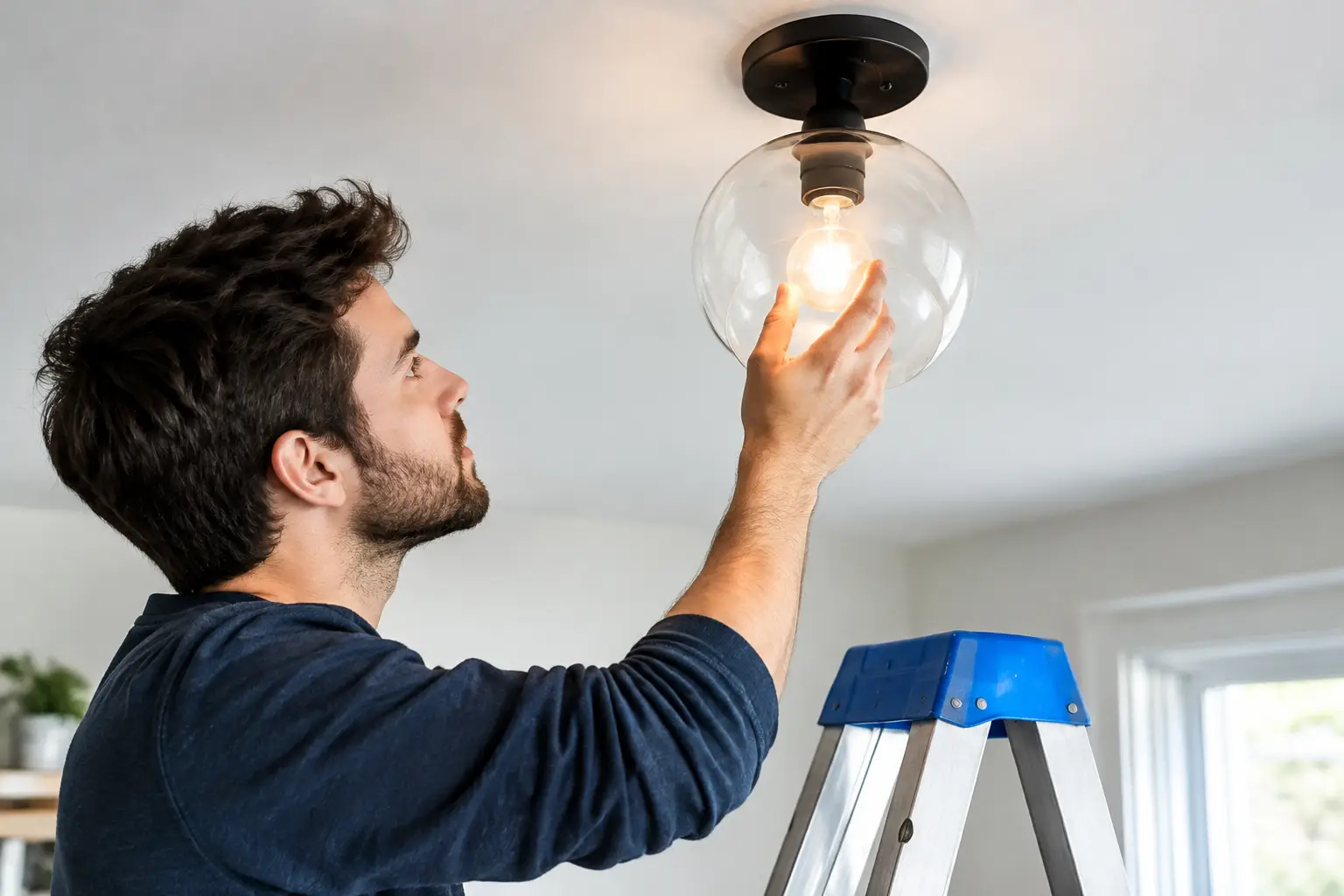
A light that flickers once when you turn on the garbage disposal may be annoying. A light that dims throughout the house, flickers every day, or crackles at the switch can point to a problem that needs attention. Learning how to stop flickering lights starts with noticing where the flicker happens, what triggers it, and whether the issue is limited to one fixture or affects your home more broadly.
Many flickering-light problems have simple causes, such as a loose bulb or an incompatible dimmer switch. Others involve loose wiring, an overloaded circuit, or a utility connection problem. The goal is not to guess. Work through the safe checks first, then know when it is time to stop troubleshooting and call a licensed electrician.
First, identify the flickering pattern
Before touching a bulb, take a minute to observe the problem. Does one lamp flicker, or do several lights on the same circuit do it? Does the flicker happen only when the HVAC system, microwave, washer, or other large appliance starts? Is it limited to a dimmer-controlled light?
A single flickering fixture usually points to the bulb, socket, switch, or fixture itself. Several lights flickering in one room may share a circuit issue. Lights flickering in multiple rooms, especially if they brighten and dim dramatically, may indicate a loose connection at the electrical panel, meter, or utility service. That is not a DIY repair. Related: How to Shut Off Main Power Safely at Home
Also pay attention to warning signs. A burning smell, hot switch plate, buzzing outlet, sparks, discoloration, or a breaker that repeatedly trips means you should stop using that circuit. Turn off the breaker if it is safe to do so and arrange for professional help.
How to stop flickering lights with simple checks
Start with the easiest, lowest-risk causes. Always turn the wall switch off before handling a bulb or fixture. If you need to remove a fixture cover or inspect anything beyond the bulb, turn off the circuit breaker too and verify the light will not turn on.
Tighten or replace the bulb
A loose bulb is one of the most common reasons for flickering. With the switch off and the bulb cool, gently tighten it. Do not force it. A bulb that will not seat properly may have damaged threads or a damaged socket.
If tightening does not solve the problem, replace the bulb with a known working bulb of the correct type and wattage. LED bulbs use far less power than older incandescent bulbs, but they can still flicker if they are low quality, damaged, or incompatible with the fixture. Make sure the replacement bulb is rated for enclosed fixtures if it will be inside a globe or sealed cover, since trapped heat can shorten an LED bulb’s life.
If one new bulb flickers in several different fixtures, the bulb is the likely issue. If several bulbs flicker in one fixture, look more closely at the fixture, dimmer, or circuit. Related: Why Breaker Feels Hot and What You Should Do
Check whether the dimmer and bulb work together
Older dimmer switches were designed for incandescent bulbs. Many LED bulbs need a dimmer specifically rated for LEDs, and not every dimmable LED works well with every dimmer.
First, confirm the bulb package says “dimmable.” Next, move the dimmer slider or dial through its full range. Flickering that occurs only at the lowest setting is often a compatibility problem, not a dangerous wiring failure. Replacing the bulb with a high-quality dimmable LED can help. If the issue continues, the dimmer may need replacement with an LED-compatible model.
Do not install or replace a dimmer unless you understand how to shut off and verify power at the breaker. A homeowner who is comfortable replacing a standard switch may be able to handle it, but loose or confusing wiring is a good reason to call an electrician.
Test the fixture and switch
Try a working bulb in the flickering fixture, then try the original bulb in another fixture. This simple test helps separate a bulb problem from a fixture problem.
If the flicker happens when you touch or wiggle the wall switch, the switch may be worn or have a loose connection. Do not keep operating a switch that feels warm, makes a buzzing sound, shocks you, or causes visible sparking. Turn off the circuit breaker and have the switch inspected.
For plug-in lamps, check the plug and cord for damage. A loose plug, crushed cord, or worn lamp socket can make the light flicker. Replace a damaged lamp rather than trying to repair its cord with tape.
Check for circuit overloads and voltage drops
Lights can briefly dim when a refrigerator compressor, furnace blower, sump pump, or air conditioner starts. A small, occasional dip can happen in normal household use. A strong or frequent drop is different, particularly if it affects several lights.
Think about what is running when the flicker starts. Space heaters, portable air conditioners, hair dryers, microwaves, and high-powered tools can put heavy demand on a circuit. If lights flicker whenever one of these appliances runs, move the appliance to a different circuit if you can do so safely. Avoid using extension cords as a permanent solution for high-wattage appliances.
Check your electrical panel for a tripped breaker. A breaker that is firmly in the middle position is tripped. To reset it, move it fully to OFF first, then back to ON. If it trips again, leave it off. Repeated trips are the breaker doing its job by responding to an overload, short circuit, or ground fault. Resetting it over and over can hide a problem rather than solve it.
Older homes with fuse boxes require a different approach. A blown fuse should be replaced only with the same type and exact amperage rating. Never install a larger fuse to stop it from blowing. That can allow wiring to overheat.
When flickering lights signal a bigger problem
Call a licensed electrician promptly if lights flicker in several rooms without an obvious appliance trigger. The same applies if lights become unusually bright and then dim, since this can indicate a loose neutral connection. Loose connections create heat and can damage electronics or become a fire hazard.
You should also get professional help when flickering comes with breaker trips, buzzing from the panel, a hot outlet or switch, scorch marks, a burning odor, or electrical shocks. These are not problems to solve by tightening a bulb or replacing a breaker.
If your neighbors are having similar issues, the problem may be on the utility side. Contact your power company to report it. Still, if only your home is affected or you notice dangerous symptoms inside, contact an electrician as well.
A practical prevention routine
Use bulbs that match the fixture’s requirements, and buy dimmable LEDs only for dimmer-controlled fixtures. Avoid overloading outlets with power strips and high-draw appliances. Keep cords in good condition, and take repeated breaker trips seriously instead of treating them as a normal inconvenience.
For older homes, an electrical inspection can be a worthwhile investment, especially after buying the house, adding major appliances, or noticing recurring flicker. CircuitFixer encourages homeowners to handle the safe, simple checks with confidence while leaving panel work, hidden wiring, and service connections to qualified professionals.
A steady light is more than a convenience. Once you have ruled out the bulb and dimmer, treat persistent flickering as useful information from your electrical system and act before a small warning becomes a larger repair.
Explore more tutorials on DIY electrical tutorials.
Frequently Asked Questions
What causes How to Stop Flickering Lights Safely at Home?
This issue is usually caused by wiring problems, overloaded circuits, or faulty electrical components.
How to fix How to Stop Flickering Lights Safely at Home?
Start by checking the breaker panel, then inspect outlets, switches, and wiring connections carefully.
Is How to Stop Flickering Lights Safely at Home dangerous?
Yes, it can be dangerous if ignored. Electrical issues can lead to fire risks or equipment damage. Related: The Future of Residential Panels at Home
Circuit Fixer provides expert electrical troubleshooting guides for homeowners in the USA.
Learn more about us at Circuit Fixer.
Author: Circuit Fixer Team
Expert Insight
This guide was created by the Circuit Fixer Team, specializing in electrical troubleshooting and home wiring solutions in the USA.
Our team works with real-world electrical issues including GFCI outlets, circuit breakers, and wiring faults.
Reviewed by: Electrical Safety Specialist

