

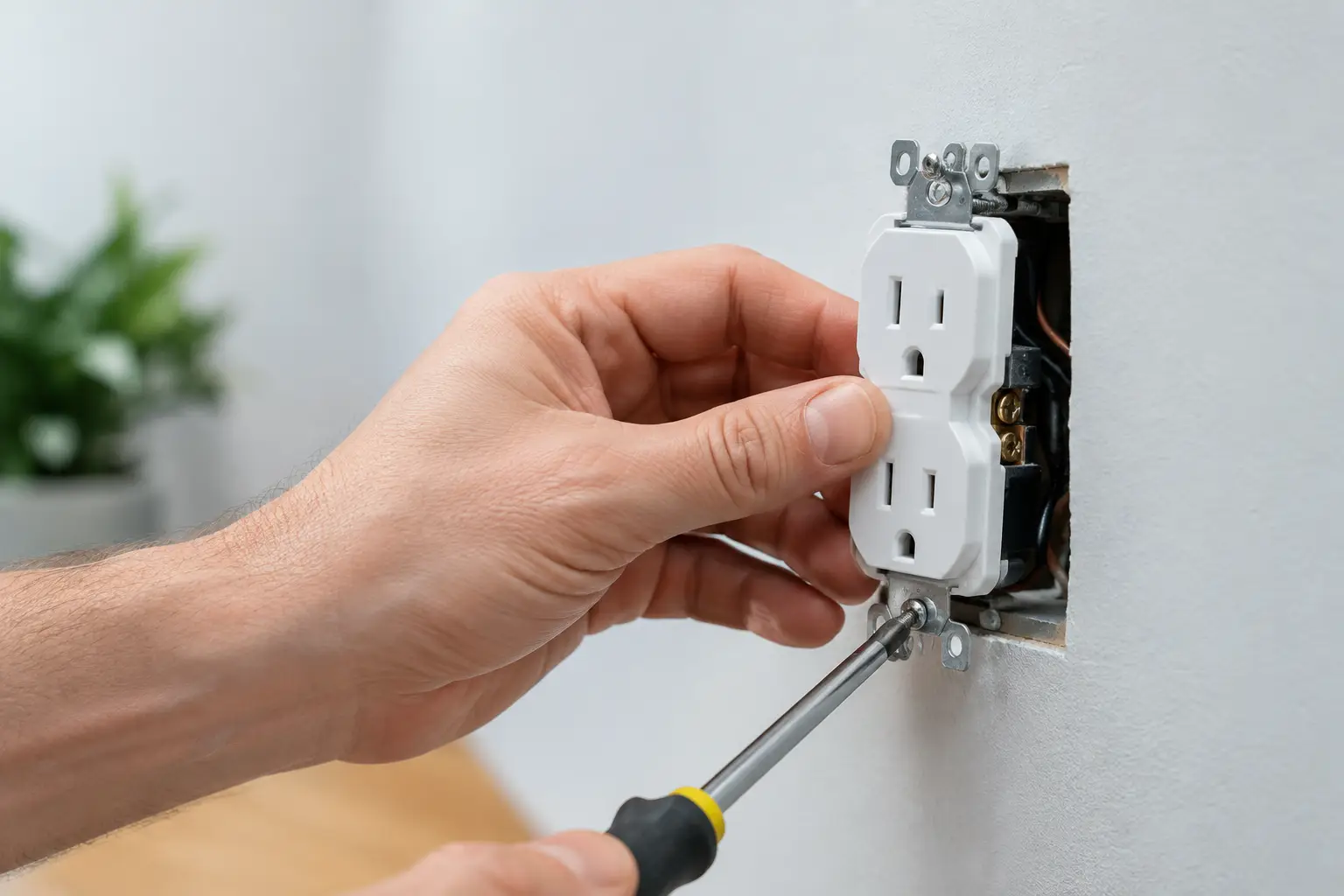
A phone charger that droops out of the wall is annoying. An outlet that shifts when you plug something in can be more than annoying. Understanding why outlets feel loose helps you separate a simple cover-plate issue from a condition that needs prompt electrical repair.
There are two different problems homeowners often call a loose outlet. The first is a plug that will not stay firmly in the slots. The second is a receptacle that physically moves in the wall box. Either can lead to poor electrical contact, damaged plugs, or exposed energized parts if it gets worse. The safe response depends on which one you are seeing.
Start by identifying what is actually loose
Before touching anything, unplug devices from the outlet. Look closely without removing the cover plate. Does the plastic face of the outlet move when you press it gently? Or does the outlet stay put while a plug slides out too easily?
If the outlet itself moves, the receptacle may not be secured properly to the electrical box, or the box may sit too far back behind the wall surface. If only the plug feels loose, the internal contacts inside the receptacle have likely worn out. Related: 8 Safest Home Electrical Upgrades to Plan First
A third possibility is a loose or cracked cover plate. This is usually a cosmetic issue, but do not assume the cover plate is the only problem if the receptacle beneath it also shifts.
Why outlets feel loose: the common causes
Worn internal contacts
Standard outlets contain spring-loaded metal contacts that grip the flat blades of a plug. Repeated use gradually weakens those contacts. High-use locations, such as kitchen counters, living rooms, and bedrooms where chargers are constantly plugged in and out, wear sooner than seldom-used outlets.
A worn receptacle may still provide power, but a loose plug can create an unreliable connection. Electricity has to pass through a small contact area, and poor contact creates resistance. Resistance creates heat. That is why a plug that falls out or feels noticeably warm deserves attention rather than a temporary workaround.
Cheap or damaged plugs can contribute, too. If one device fits loosely but other plugs fit firmly, inspect that device’s plug blades. Bent, thin, corroded, or spread-out blades may be the real issue. Do not try to squeeze plug blades together while they are connected to a cord.
A receptacle that is not firmly mounted
An outlet should sit solidly against the finished wall. If it rocks, sinks inward, or pulls forward with a plug, the mounting screws may be loose, the electrical box may be damaged, or the outlet may not be supported at the proper depth.
This is common after drywall, tile, paneling, or a backsplash has been added. The wall surface becomes thicker, leaving the electrical box recessed too far behind it. The outlet may then be pulled forward by the cover plate screw instead of being correctly supported by the box. A qualified repair uses approved box extenders or spacers, not improvised stacks of washers, cardboard, or pieces of plastic.
Older homes can have another complication: the original electrical box may be loose in the wall. A moving box can strain the wires connected to the outlet whenever someone inserts or removes a plug.
A cracked, damaged, or overheated receptacle
Plastic that is cracked, discolored, melted, or scorched is not a simple loose-outlet problem. It can indicate overheating, arcing, or physical damage. The same is true if you hear buzzing or crackling, smell burning plastic, see sparks beyond a tiny occasional static snap, or find that a plug or outlet face becomes hot.
Turn off the breaker serving that outlet if you can identify it safely. Keep the outlet out of use and arrange for a licensed electrician to inspect it. Do not cover the problem with electrical tape or rely on a power strip plugged into a different questionable outlet. Related: How to Identify a Tripped GFCI Outlet Safely
Loose wiring behind the outlet
A loose outlet does not automatically mean the wires are loose, but the two can occur together. Movement over time may stress terminal screws, push-in connections, wire insulation, or the cable entering the box. Loose wiring can cause flickering, intermittent power, heat, arcing, and breaker trips.
Because these conditions are hidden behind the cover plate, they are not something to diagnose by poking inside the box. Homeowners can recognize warning signs and shut off power, but examining or correcting questionable wiring is work for a qualified electrician. Related: How to Reset Garbage Disposal Power Safely
What you can safely check yourself
A few careful checks can help you decide what happens next. Do not remove an outlet cover or touch the receptacle while power is on.
First, unplug everything from the outlet. Test several ordinary plugs one at a time. If all of them slip out easily, stop using the outlet. If only one plug is loose, set that device or cord aside and inspect it for damage.
Next, gently press the outlet face near the edges, not inside the slots. If it moves, note whether the cover plate is loose as well. A cover plate screw can sometimes be tightened with the breaker on because it does not contact energized components, but turning off the breaker first is the safer habit. If tightening the plate leaves the receptacle itself wobbly, the issue is behind the plate and needs repair.
Check for heat only after a device has been unplugged and the outlet has had time to cool. Never use a damp hand. If the outlet or plug was warm during normal use, treat that as a warning sign, especially with appliances that draw more power, such as space heaters, window air conditioners, hair dryers, or countertop cooking equipment.
Finally, notice the pattern. Does the outlet lose power when a cord is bumped? Do nearby lights flicker? Has the breaker tripped recently? Those details help an electrician find the source quickly, and they point away from a harmless cosmetic fix.
Do not rely on temporary fixes
It is tempting to prop up a loose outlet with a thicker cover plate, tape a plug in place, or keep pressure on the cord with furniture. Those fixes can hide the problem while allowing the connection to overheat or the receptacle to pull farther from the box.
Avoid oversized plugs, multi-plug adapters, and heavy transformer-style chargers in a loose outlet. Their weight puts extra stress on the receptacle and can worsen a poor connection. If you need power in that area before a repair, use a different known-good outlet and keep extension cords temporary, visible, and away from rugs, doorways, and heat sources.
Do not keep resetting a breaker that trips when the loose outlet is used. A tripping breaker is doing its job by interrupting a possible overload, short circuit, or ground fault.
When a homeowner repair may be reasonable
A loose cover plate with a firmly mounted, undamaged receptacle is usually a straightforward maintenance item. With the breaker off, a homeowner can replace a cracked cover plate or carefully tighten its center screw without overtightening it.
Replacing an entire receptacle is more involved. It requires verifying that power is off, understanding how the outlet is wired, checking box fill and grounding, selecting the right receptacle rating, and mounting it correctly. In a newer home with a simple, well-labeled circuit, an experienced DIY homeowner may be comfortable with that work. In an older home, a metal box, aluminum wiring, multiple wires, scorch marks, a GFCI outlet, or any uncertainty changes the equation. Call an electrician.
The cost of professional repair is usually far lower than the cost of repairing heat damage inside a wall. A qualified electrician can secure the box, install a box extender if needed, replace the receptacle, and inspect the connections at the same time.
Call for prompt help if you see these signs
Turn off the circuit and contact a licensed electrician promptly if the outlet is hot, buzzing, sparking repeatedly, discolored, melted, cracked, wet, or physically pulling out of the wall. Do the same if it smells burnt, causes flickering, loses power intermittently, or trips the breaker.
For a smoking outlet, visible flames, or a burning smell that continues after power is shut off, call 911 from a safe location. Do not spray water on an electrical fire.
A firm outlet should hold a plug securely and remain steady every time you use it. If yours does not, treating the problem early is one of the simplest ways to protect your home and keep a small repair from becoming a larger electrical hazard.
For more expert guides, visit electrical guides.
Frequently Asked Questions
What causes Why Outlets Feel Loose and What You Can Do Safely?
This issue is usually caused by wiring problems, overloaded circuits, or faulty electrical components.
How to fix Why Outlets Feel Loose and What You Can Do Safely?
Start by checking the breaker panel, then inspect outlets, switches, and wiring connections carefully.
Is Why Outlets Feel Loose and What You Can Do Safely dangerous?
Yes, it can be dangerous if ignored. Electrical issues can lead to fire risks or equipment damage.
Circuit Fixer provides expert electrical troubleshooting guides for homeowners in the USA.
Learn more about us at Circuit Fixer.
Author: Circuit Fixer Team
Expert Insight
This guide was created by the Circuit Fixer Team, specializing in electrical troubleshooting and home wiring solutions in the USA.
Our team works with real-world electrical issues including GFCI outlets, circuit breakers, and wiring faults.
Reviewed by: Electrical Safety Specialist

