

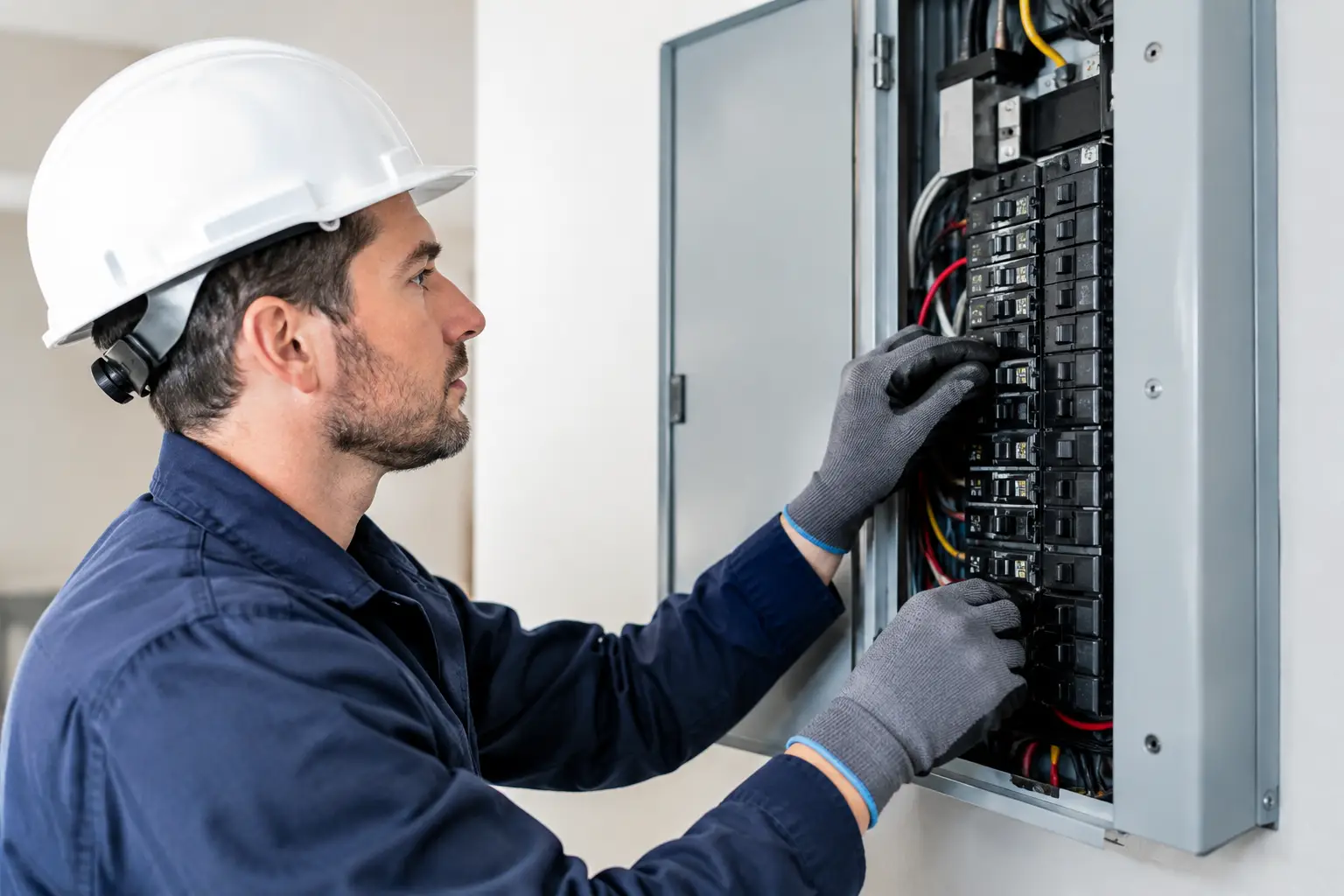
A breaker that trips once after you plug too many things into one circuit is usually doing its job. A breaker that trips repeatedly, feels warm, or is paired with flickering lights is a different kind of warning. Knowing the signs electrical panel needs replacement can help you act before a frustrating power problem turns into damaged equipment, a shock risk, or a fire hazard.
Your electrical panel is the home’s traffic controller. It receives power from the utility and distributes it safely to each circuit. Most homeowners can do a basic visual check and note what is happening, but panel repairs and replacement belong to a licensed electrician. The goal is not to diagnose every internal problem yourself. It is to recognize when your home is asking for professional attention.
1. Breakers Trip Often or Will Not Reset
Circuit breakers trip to stop a circuit from overheating. An occasional trip may point to a temporary overload, such as running a space heater, microwave, and toaster on the same kitchen circuit. Start by unplugging a few items, then reset the breaker once. Related: How to Inspect Damaged Extension Cords Safely
If the breaker trips again with normal use, will not stay in the ON position, or trips even when nothing is plugged in, do not keep resetting it. The problem could be a damaged appliance, a wiring fault, a worn breaker, or an overloaded circuit. In some cases, the panel itself is no longer able to support the home’s electrical needs.
Repeated resets can allow a serious issue to continue. Make a note of which breaker trips, what was running at the time, and whether the problem affects one room or several. That information helps an electrician determine whether you need a new circuit, a breaker replacement, or a panel upgrade.
2. The Panel Is Warm, Makes Noise, or Smells Burnt
Your electrical panel should not feel hot. It also should not buzz, crackle, hiss, or give off a burning-plastic smell. These signs can indicate loose connections, overheating breakers, damaged bus bars, or arcing inside the panel.
Treat these symptoms as urgent. If you notice smoke, sparks, visible scorching, or a strong burning odor, move people away from the area and call emergency services if there is an immediate fire risk. If it is safe to do so and you know how to access it without touching damaged equipment, turn off the main breaker. Then contact a licensed electrician right away.
Do not remove the panel cover to investigate. Even with the main breaker off, parts of the panel may still be energized. A visual check from the outside is enough for a homeowner.
3. You See Rust, Corrosion, or Water Damage
Moisture and electricity do not mix. Rust on the panel enclosure, corrosion around breakers, water stains on the wall, or dampness near the panel can compromise connections and create shock or fire risks.
Water damage often comes from a leaking pipe, a wet basement, roof intrusion, or condensation. Fixing the water source matters, but it does not automatically mean the electrical equipment is safe afterward. An electrician should inspect any panel that has been exposed to water, especially if it was flooded.
Light surface rust on the outside of an older metal cabinet may not always require full replacement. Internal corrosion, water entry, or recurring moisture usually calls for a more serious evaluation. This is one of those situations where the right answer depends on what is happening inside the equipment, not just what you can see on the cover.
4. Lights Flicker, Dim, or Surge Around the House
A single flickering bulb may simply be loose or nearing the end of its life. But lights that dim when appliances start, brighten unexpectedly, flicker in multiple rooms, or accompany outlets that stop working can point to a larger electrical issue. Related: How to Replace a Cartridge Fuse Safely at Home Related: Why Are Outlets Warm to the Touch at Home?
Pay close attention if lights get brighter when a high-demand appliance turns on. That can be a sign of a loose neutral connection, which needs prompt professional attention. Likewise, electronics that restart unexpectedly, appliances that behave inconsistently, or bulbs that burn out unusually fast may indicate unstable power.
These issues are not always caused by the panel. They can come from branch wiring, the service connection, or utility-side equipment. Still, widespread or recurring power changes are among the signs an electrical panel needs replacement or at least an expert inspection.
5. Your Panel Uses Fuses or Has an Obsolete Design
A fuse box is not automatically unsafe. Many older homes still have properly maintained fuse panels that meet their current electrical demand. The concern is whether the system has enough capacity, uses the correct fuses, and remains in good condition.
Problems arise when homeowners install oversized fuses to stop them from blowing, use adapters that allow the wrong fuse type, or rely on a small panel for a modern home full of electronics and appliances. Fuses must match the wire size and circuit rating. Installing a larger fuse can allow wiring to overheat before the fuse opens the circuit.
Some older breaker panel brands and models also have known safety concerns or may be difficult to service with approved replacement parts. A licensed electrician can identify the equipment and explain whether replacement is recommended. If your panel has no clear labeling, has mixed breaker types, or shows signs of past improvised work, schedule an inspection rather than guessing.
6. You Do Not Have Enough Circuits for How You Live
Homes use more power than they did a few decades ago. Home offices, induction ranges, electric vehicle chargers, heat pumps, hot tubs, workshop tools, and larger entertainment systems can all add significant demand.
Clues that your panel is undersized include extension cords used as permanent solutions, power strips in every room, frequent overloads, or a panel with no open breaker spaces. A lack of space does not always require replacing the entire panel. Sometimes a subpanel or a few dedicated circuits are the better solution.
However, if your main service capacity is too low for a planned upgrade, adding circuits alone will not solve the problem. Before installing an EV charger, remodeling a kitchen, finishing a basement, or adding major electric appliances, ask an electrician to perform a load calculation. It tells you whether your existing service and panel can safely handle the added demand.
7. The Panel Shows Physical Damage or Poor Workmanship
Open knockouts, missing panel covers, loose breakers, cracked enclosures, unlabeled circuits, or tangled wiring around the panel deserve attention. Labels do not need to be perfect, but you should be able to identify the main breaker and reasonably match each circuit to an area of your home.
Poor workmanship can be harder to spot from the outside. Warning signs include double-tapped breakers, where two wires appear to share a terminal meant for one, mismatched breakers, or frequent problems after a previous DIY repair. Do not tighten terminals or move wires yourself. Those tasks require working near energized components and should be handled by a qualified electrician.
What You Can Safely Check Before Calling an Electrician
A few observations can make the service visit faster and more useful. Stay outside the panel, keep the cover closed, and avoid touching anything that looks damaged. You can safely record:
- Which rooms, outlets, or appliances are affected
- Whether a specific breaker trips and what was operating at the time
- Any heat, odors, noise, discoloration, rust, or moisture you notice
- The panel’s brand, approximate age, and whether it uses breakers or fuses
- Recent changes, such as a new appliance, renovation, storm, or water leak
Take clear photos of the exterior and the circuit directory if there is no active danger. If you smell burning, see smoke, or hear arcing, skip the photos and focus on getting help.
Replacement Is Not Always the Only Answer
A panel problem does not automatically mean you need a complete replacement. A faulty breaker can sometimes be replaced. A dedicated circuit may solve an overload. A subpanel may create room for new circuits. On the other hand, a damaged, obsolete, undersized, or water-affected panel may make replacement the safer long-term choice.
The practical takeaway is simple: pay attention to changes. Your electrical system rarely asks for help without leaving clues first. When those clues include repeated tripping, heat, burning smells, corrosion, unreliable power, or too little capacity for your home, pause the DIY troubleshooting and bring in a licensed electrician. That decision protects your home and gives you a safer foundation for every repair and upgrade that comes next.
Explore more tutorials on electrical guides.
Frequently Asked Questions
What causes 7 Signs Electrical Panel Needs Replacement?
This issue is usually caused by wiring problems, overloaded circuits, or faulty electrical components.
How to fix 7 Signs Electrical Panel Needs Replacement?
Start by checking the breaker panel, then inspect outlets, switches, and wiring connections carefully.
Is 7 Signs Electrical Panel Needs Replacement dangerous?
Yes, it can be dangerous if ignored. Electrical issues can lead to fire risks or equipment damage.
Circuit Fixer provides expert electrical troubleshooting guides for homeowners in the USA.
Learn more about us at Circuit Fixer.
Author: Circuit Fixer Team
Expert Insight
This guide was created by the Circuit Fixer Team, specializing in electrical troubleshooting and home wiring solutions in the USA.
Our team works with real-world electrical issues including GFCI outlets, circuit breakers, and wiring faults.
Reviewed by: Electrical Safety Specialist

