

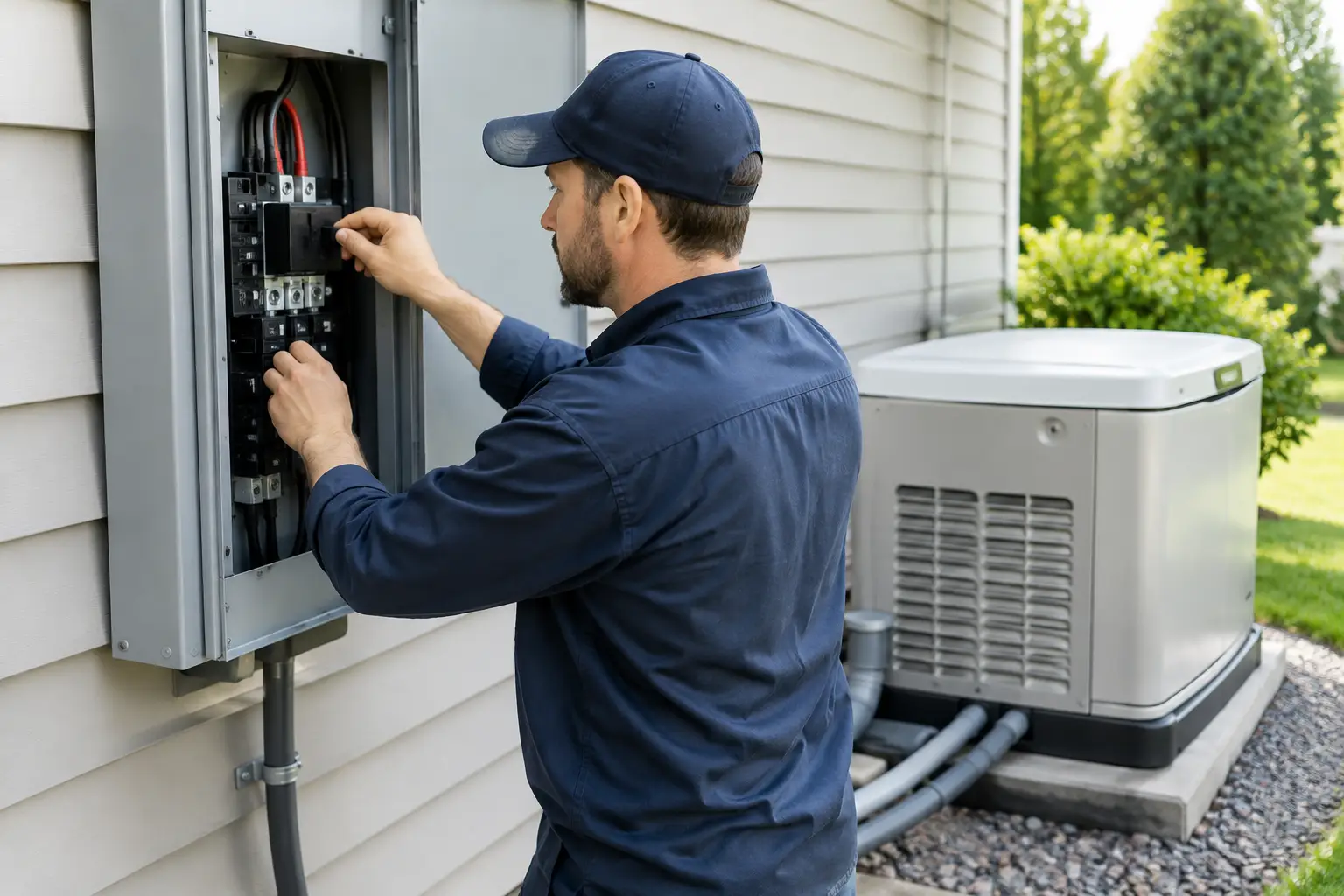
A generator can keep the refrigerator cold, the sump pump running, and a few lights on when the grid goes down. But plugging a generator into a wall outlet or trying to power the house without the right equipment can create a deadly backfeed hazard. This home generator transfer switch guide explains what the switch does, how to choose one, and which parts of the job require a licensed electrician.
What a Transfer Switch Does
A transfer switch is a safety device installed between your home’s electrical panel and a generator. It gives electricity a controlled path from the generator to selected home circuits while preventing generator power and utility power from flowing at the same time.
That separation matters. Without it, generator electricity can travel backward through utility lines, a problem called backfeeding. Backfeeding can injure utility workers, damage your generator, and create a serious fire or shock risk in your home.
A properly installed transfer switch also makes an outage less stressful. Instead of running extension cords across rooms, you can power the circuits that matter most from one clearly marked location. For many homeowners, that means the refrigerator, furnace blower, sump pump, a few kitchen outlets, internet equipment, and selected lights.
Transfer Switch, Interlock, or Extension Cords?
There is more than one safe way to use a portable generator, and the best choice depends on your budget, generator size, and how often outages affect your home.
Extension cords are the simplest option. You run heavy-duty, outdoor-rated cords directly from the generator to individual appliances. This works for a refrigerator, freezer, lamp, or phone charger, but it becomes inconvenient quickly. Cords can create trip hazards, cannot power hardwired equipment, and should never be run through windows, doors, walls, or ceilings where they can be damaged.
A manual transfer switch powers a predetermined group of circuits. During an outage, you start the generator, connect it to the outdoor inlet box, and move the selected circuits from utility power to generator power. It is a practical fit for homeowners using a portable generator and wanting reliable access to essential circuits.
A panel interlock kit is another option. It uses a mechanical device at the main electrical panel to prevent the main breaker and generator breaker from being on at the same time. An interlock can be less expensive than a separate transfer switch, but it must be listed for your exact panel model and installed correctly. Because it involves working inside the main panel, installation is not a DIY project.
An automatic transfer switch is commonly paired with a standby generator. When utility power fails, it signals the generator to start and transfers the home or selected circuits automatically. It costs more, but it offers convenience that a portable generator setup cannot match. Related: Why Outlets Buzz and When You Should Worry
Choosing the Right Transfer Switch Capacity
The switch must match both your generator and the way you plan to use power. Bigger is not always better if your generator cannot support the load you connect.
Start by deciding which circuits you need during an outage. A typical essential-load plan may include:
- Refrigerator or freezer circuit
- Sump pump or well pump circuit
- Furnace blower or boiler controls
- A few lighting and general-use outlet circuits
- Internet modem, router, and device charging outlets
Next, check the running watts and starting watts of the appliances on those circuits. Motors often need extra power for a few seconds when they start. A refrigerator, sump pump, and furnace blower may each have a startup surge, so avoid assuming their running wattage tells the full story.
Your generator’s rated running watts are the number to respect. A 5,000-watt generator may handle a refrigerator, lights, internet equipment, and a gas furnace blower comfortably, but adding a large well pump, electric water heater, clothes dryer, central air conditioner, or electric range can overload it fast. Related: Extension Cord Safety: A Homeowners Guide
The transfer switch amperage also matters. Common portable-generator setups use 30-amp or 50-amp connections. A 30-amp, 240-volt connection can provide up to 7,200 watts in theory, while a 50-amp connection can provide up to 12,000 watts. Actual usable output still depends on the generator. Never install a larger breaker or inlet simply to get more power from a smaller generator.
Manual Transfer Switch vs. Automatic Transfer Switch
A manual transfer switch gives you control and typically costs less. It is a strong choice if outages are occasional and you are comfortable setting up your portable generator. You will need to be home, start the generator, connect it, and manage which loads are operating.
An automatic transfer switch makes more sense when you have a permanently installed standby generator, frequent outages, medical equipment that needs dependable backup power, or a home that may be vacant during storms. The generator starts automatically and the switch transfers power without you handling cords or breakers. Related: 120V Versus 240V Outlets: What’s the Difference?
There is a middle ground, too. Some homeowners install a manual transfer switch now for a portable generator and later upgrade to a standby system. If that is your plan, tell the electrician early. The location of the inlet, load center, and future generator can affect the best design.
What Professional Installation Should Include
A transfer switch installation is not the same as replacing a light switch. It involves the service panel, branch circuits, grounding and bonding requirements, overcurrent protection, and local electrical code. A licensed electrician should install the transfer switch or panel interlock, generator inlet box, and associated wiring.
A good installation should include a clearly labeled outdoor power inlet. This is where you connect the generator using a generator cord designed for that purpose. It should never be a homemade double-male cord, sometimes called a suicide cord. That type of cord leaves energized prongs exposed and is extremely dangerous.
The electrician should also label every backed-up circuit and explain how to operate the equipment. Ask whether your setup is designed for 120-volt only loads, 240-volt loads, or both. This is especially relevant for well pumps, some sump pumps, and certain heating equipment.
Before work begins, confirm that permits and inspections are handled as required in your area. Electrical rules vary by location, and following them protects your family, utility workers, and insurance coverage.
Safe Generator Operating Habits
Even a perfect transfer switch cannot make an unsafe generator location safe. Carbon monoxide is one of the biggest risks during a power outage. Run a portable generator outdoors only, at least 20 feet from doors, windows, vents, and attached garages. Point exhaust away from the house.
Keep the generator dry and on a stable surface. Use a generator canopy designed to maintain ventilation if weather protection is needed. Never operate it in a garage, basement, shed, crawlspace, or enclosed porch, even with doors or windows open.
Turn off or disconnect major loads before starting the generator. Once it is running smoothly, connect it to the inlet and transfer circuits according to the instructions for your equipment. Add loads one at a time, beginning with the most important appliances.
Fuel safely. Shut the generator off and let it cool before adding gasoline. Store fuel in approved containers away from living spaces and ignition sources. If your generator uses propane or natural gas, have the fuel connection designed and installed for that specific equipment.
Test Before the Next Outage
The worst time to learn that a generator setup has a problem is during a storm. Test your system a few times each year, following the manufacturer instructions and any local rules about generator operation. Run the generator outdoors, transfer a small number of circuits, and confirm that the refrigerator, sump pump, lights, and other priority equipment operate as expected.
During each test, listen for generator bogging, check that circuit breakers do not trip, and verify that carbon monoxide alarms are working. If the generator struggles when a motor starts, reduce the load or ask an electrician whether your circuit plan needs adjustment.
Keep the generator maintained with fresh fuel, correct oil level, a clean air filter, and a charged battery if it has electric start. CircuitFixer recommends keeping the operating instructions near the transfer switch so any responsible adult in the household can follow the process calmly.
A transfer switch does more than make backup power convenient. It creates the safe boundary that lets your home use generator power without putting people, equipment, or utility crews at risk. Plan the circuits you truly need, have the connection installed professionally, and practice before the lights go out.
Explore more tutorials on DIY electrical tutorials.
Frequently Asked Questions
What causes Home Generator Transfer Switch Guide for Safety?
This issue is usually caused by wiring problems, overloaded circuits, or faulty electrical components.
How to fix Home Generator Transfer Switch Guide for Safety?
Start by checking the breaker panel, then inspect outlets, switches, and wiring connections carefully.
Is Home Generator Transfer Switch Guide for Safety dangerous?
Yes, it can be dangerous if ignored. Electrical issues can lead to fire risks or equipment damage.
Circuit Fixer provides expert electrical troubleshooting guides for homeowners in the USA.
Learn more about us at Circuit Fixer.
Author: Circuit Fixer Team
Expert Insight
This guide was created by the Circuit Fixer Team, specializing in electrical troubleshooting and home wiring solutions in the USA.
Our team works with real-world electrical issues including GFCI outlets, circuit breakers, and wiring faults.
Reviewed by: Electrical Safety Specialist

