

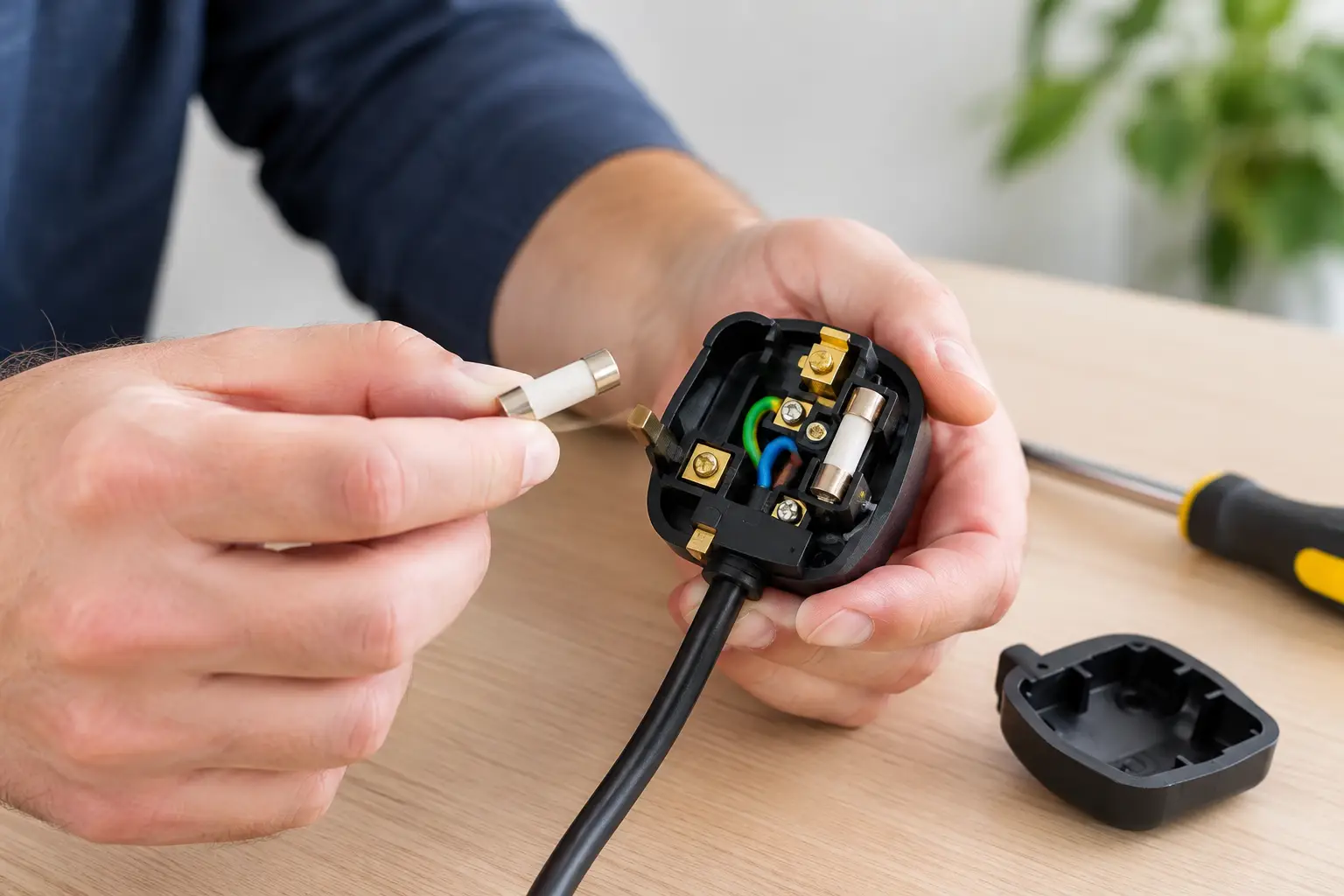
A lamp, kettle, or other small appliance suddenly stops working, yet the outlet still has power. Before replacing the appliance, you may be able to solve the problem by learning how to replace plug fuse safely. The key is knowing whether your plug actually contains a replaceable fuse and using an exact match for the original.
For most US homeowners, this requires one quick clarification: standard North American two- and three-prong plugs typically do not have a user-replaceable fuse inside. A replaceable plug fuse is more common on UK-style plugs and some imported appliances, power cords, and specialty equipment. If you have a standard molded US plug, do not pry it open. The problem may be in the cord, appliance, outlet, GFCI, or circuit breaker instead.
First, Make Sure You Have a Fused Plug
Look at the plug before you do anything else. A plug with a removable cover, often secured by a small screw, may contain a fuse. UK-style BS 1363 plugs are the most familiar example. They have three rectangular pins and a fuse inside the plug body.
A molded plug is sealed plastic with no access cover. It is not designed for home repair. Replacing the plug or cord assembly may be possible, but it is a different repair and should only be done if you understand proper wire connections and strain relief.
Also, do not confuse an appliance plug fuse with an older screw-in fuse at an electrical panel. Panel fuses protect branch circuits in your home, while a plug fuse protects the cord and appliance. If your home has a fuse box rather than circuit breakers, a blown panel fuse calls for a separate troubleshooting process.
What You Need Before Replacing a Plug Fuse
Start with the right replacement fuse. The rating is usually printed on the fuse itself, such as 3A, 5A, 10A, or 13A. For UK-style plugs, the fuse is commonly a ceramic cartridge style. It must match the required amperage, physical size, and fuse type.
Do not choose a higher-rated fuse simply because it is available. A fuse is a safety device designed to fail before a cord overheats or electrical components are damaged. Installing a larger fuse can allow unsafe current to keep flowing during a fault. Related: Electrical Emergency Response Guide for Homes
You will usually need a small flat-head screwdriver to open the plug cover or lift the fuse from its holder. Good lighting helps, and it is smart to keep the old fuse nearby until you confirm the new one matches it.
How to Replace a Plug Fuse Step by Step
1. Unplug the appliance completely
Pull the plug from the wall outlet before opening it. Turning the appliance switch off is not enough. You want the plug fully disconnected from all power before touching the fuse or internal terminals.
If the plug or cord feels hot, smells burnt, has cracked insulation, or shows melted plastic, stop there. Replacing a fuse will not correct heat damage. The cord, plug, or appliance needs professional evaluation or replacement.
2. Open the plug cover
Place the unplugged plug on a stable surface. Depending on the design, loosen the retaining screw or carefully release the cover. Keep the screw in a small dish or other safe spot so it does not roll away.
Once open, look for the cartridge fuse. In many UK-style plugs, it sits in a molded channel between the live terminal and the rest of the plug assembly. You do not need to disconnect any wires to replace it.
Avoid touching terminal screws or moving the wires unnecessarily. If a wire is loose, frayed, or connected incorrectly, the repair is no longer just a fuse replacement.
3. Remove the old fuse
Use your fingers or a small screwdriver to gently lift the fuse from its clips. Do not force it. If it is stubborn, check whether the plug has a fuse carrier that needs to be lifted first. Related: Fix Warm Light Switch Problems Before They Worsen
Inspect the fuse, but do not rely only on what you see. A blown fuse may have a broken internal element, dark discoloration, or no obvious visible damage at all. The appliance may still have a fault even if the fuse looks normal.
4. Match the replacement exactly
Read the amperage marking on the old fuse and compare it with the replacement. Use the same rating unless the appliance manufacturer specifically states a different required fuse rating.
For context, lower-power appliances such as lamps, chargers, and small electronics often use a 3A fuse. Higher-wattage heating appliances may require a higher rating, often 13A on UK-style plugs. Still, do not guess based on appliance size. Check the appliance label, manual, or existing fuse specification.
Never bridge the fuse clips with foil, wire, or any other metal object. That removes the plug’s protection and creates a serious fire and shock hazard. Related: How to Inspect Damaged Extension Cords Safely
5. Install the new fuse and close the plug
Press the new fuse firmly into the same clips or carrier where the old fuse sat. It should fit securely without bending or forcing the metal contacts.
Before closing the plug, take a quick look at the cord clamp. The outer cord jacket, not the individual inner wires, should be held firmly by the clamp. The cord should not pull free when given a gentle tug.
Reinstall the cover, tighten the screw until snug, and make sure the plug closes fully. Do not overtighten a plastic cover, which can strip threads or crack the casing.
6. Test the appliance carefully
Plug the appliance into a known working outlet and switch it on. Stay nearby for the first minute. If it works normally and the plug remains cool, the replacement may have solved the issue.
If the new fuse blows immediately, unplug the appliance right away. Do not keep replacing fuses. Repeated fuse failures usually mean the appliance, cord, or internal wiring has a fault that needs repair or replacement.
Why Plug Fuses Blow
A plug fuse can blow because of a short circuit, an overloaded appliance, damaged wiring, moisture, or a failed internal component. Sometimes the fuse simply reaches the end of its service life, but that is less common than an underlying fault.
Pay attention to what happened just before the appliance stopped working. A fuse that blows when you turn on a space heater, toaster, or other high-heat device may point to an internal element problem. A fuse that blows after a cord was pinched behind furniture may indicate damaged insulation.
If multiple devices stop working on one wall outlet, the plug fuse is probably not the issue. Check whether a nearby GFCI outlet has tripped, then inspect your electrical panel for a tripped breaker. One appliance’s fuse cannot shut off power to other devices on the same circuit.
When to Stop and Call for Help
A basic fuse swap is manageable when the plug is designed to open, the cord is in good condition, and you can identify the correct fuse rating. Stop and seek qualified help if you find any burning smell, melted plastic, exposed wire, loose terminals, repeated fuse failures, or signs of water damage.
The same applies when you are unsure whether you are dealing with a fused appliance plug, a panel fuse, or a standard US molded plug. Electrical repairs are safest when the problem is clearly identified before parts are changed.
Replacing the correct fuse can get a useful appliance working again, but the fuse is also giving you information. Treat a second blown fuse as a reason to investigate the appliance, not as an invitation to try a stronger one. That simple decision protects your home, your equipment, and the people using both.
Check out more electrical solutions on electrical guides.
Frequently Asked Questions
What causes How to Replace a Plug Fuse Safely at Home?
This issue is usually caused by wiring problems, overloaded circuits, or faulty electrical components.
How to fix How to Replace a Plug Fuse Safely at Home?
Start by checking the breaker panel, then inspect outlets, switches, and wiring connections carefully.
Is How to Replace a Plug Fuse Safely at Home dangerous?
Yes, it can be dangerous if ignored. Electrical issues can lead to fire risks or equipment damage.
Circuit Fixer provides expert electrical troubleshooting guides for homeowners in the USA.
Learn more about us at Circuit Fixer.
Author: Circuit Fixer Team
Expert Insight
This guide was created by the Circuit Fixer Team, specializing in electrical troubleshooting and home wiring solutions in the USA.
Our team works with real-world electrical issues including GFCI outlets, circuit breakers, and wiring faults.
Reviewed by: Electrical Safety Specialist

